%20%20--%3E%0A%3Csvg%20version%3D%221.1%22%20xmlns%3D%22http%3A%2F%2Fwww.w3.org%2F2000%2Fsvg%22%20xmlns%3Axlink%3D%22http%3A%2F%2Fwww.w3.org%2F1999%2Fxlink%22%20x%3D%220px%22%20y%3D%220px%22%0A%09%20viewBox%3D%220%200%201092.7%20200%22%20style%3D%22enable-background%3Anew%200%200%201092.7%20200%3B%22%20xml%3Aspace%3D%22preserve%22%3E%0A%3Cstyle%20type%3D%22text%2Fcss%22%3E%0A%09.st0%7Bfill%3A%23231F20%3B%7D%0A%09.st1%7Bfill%3A%23293576%3B%7D%0A%09.st2%7Bfill%3A%23C82C2D%3B%7D%0A%09.st3%7Bfill%3A%23FFFFFF%3B%7D%0A%3C%2Fstyle%3E%0A%3Cg%20id%3D%22Template%22%3E%0A%3C%2Fg%3E%0A%3Cg%20id%3D%22Layer_2%22%3E%0A%09%3Cpolygon%20class%3D%22st3%22%20points%3D%2256.8%2C78.5%2073.1%2C78.5%2085.5%2C78.5%2085.5%2C36.3%2085.5%2C0%2068.8%2C0%2064.9%2C6.2%2063.3%2C8.7%2052%2C0%2025.5%2C0%2021.8%2C3.8%20%0A%09%092%2C23.8%202%2C176.2%2025%2C200%2061.5%2C200%2085.5%2C176.2%2085.5%2C121.5%2056.8%2C121.5%2056.8%2C176.2%2039.5%2C176.2%2039.5%2C32.4%2039.5%2C23.8%2056.8%2C23.8%2056.8%2C57.2%20%0A%09%09%09%22%2F%3E%0A%09%3Cpolygon%20class%3D%22st3%22%20points%3D%22143.9%2C104.2%20143.9%2C48.1%20143.9%2C24.2%20152.1%2C24.2%20153.2%2C24.2%20153.2%2C0%20152.1%2C0%20106.8%2C0%2093.9%2C0%2093.9%2C24.2%20%0A%09%09106.7%2C24.2%20106.7%2C63.4%20106.7%2C116.9%20106.7%2C175.8%20130.4%2C200%20169.2%2C200%20183%2C184.8%20191.2%2C175.8%20191.2%2C146.2%20191.2%2C96.1%20191.2%2C24.2%20%0A%09%09201.4%2C24.2%20201.4%2C0%20163.7%2C0%20158.7%2C0%20158.7%2C24.2%20163.7%2C24.2%20169.2%2C24.2%20169.2%2C75.2%20169.2%2C127.8%20169.2%2C174.1%20169.2%2C175.8%20%0A%09%09143.9%2C175.8%20143.9%2C152.9%20%09%22%2F%3E%0A%09%3Cpath%20class%3D%22st3%22%20d%3D%22M220.3%2C168v8.3h-10.5V200h62.1h12.7l28.5-23.8v-66l-5.2-5.1l-7.8-7.6l7.8-7.8l2.5-2.5V60V25.7%0A%09%09c0%2C0.7-8.6-7.9-25.7-25.7h-43H230h-20.2v23.8h10.5v96.7V168z%20M257.5%2C23.8h22.2v60.5h-22.2V23.8z%20M257.5%2C110.3h22.2v50.2v15.8h-22.2%0A%09%09v-29.4V110.3z%22%2F%3E%0A%09%3Cpath%20class%3D%22st3%22%20d%3D%22M331.9%2C176.2h-10.5v6V200h42.8h21.4h10.5l1-0.9l27.4-22.9v-56.9v-9.1l-13-12.8l10.3-10.2V25.7%0A%09%09c0%2C0.7-8.6-7.9-25.7-25.7h-74.8v23.8h10.5V45V176.2z%20M391.4%2C176.2h-5.8h-16.5v-66h22.2v17.9V176.2z%20M369.2%2C23.8h22.2v60.5H376h-6.9%0A%09%09v-5.6V23.8z%22%2F%3E%0A%09%3Cpolygon%20class%3D%22st3%22%20points%3D%22443.3%2C175.8%20433%2C175.8%20433%2C200%20463.5%2C200%20475%2C200%20489.5%2C200%20489.5%2C175.8%20480%2C175.8%20480%2C147.6%20%0A%09%09480%2C25.5%20489.5%2C25.5%20489.5%2C0%20433%2C0%20433%2C25.5%20443.3%2C25.5%20443.3%2C130.4%20%09%22%2F%3E%0A%09%3Cpolygon%20class%3D%22st3%22%20points%3D%22505.6%2C175.8%20497.9%2C175.8%20497.9%2C200%20541.3%2C200%20552.9%2C200%20583.6%2C200%20595.1%2C187.7%20595.1%2C153.9%20%0A%09%09595.1%2C140.7%20566.9%2C140.7%20566.9%2C159.5%20566.9%2C175.8%20542.6%2C175.8%20542.6%2C160.5%20542.6%2C115.8%20556.6%2C115.8%20556.6%2C133%20580.1%2C133%20%0A%09%09580.1%2C67.7%20556.6%2C67.7%20556.6%2C85%20542.6%2C85%20542.6%2C25.5%20566.9%2C25.5%20566.9%2C60.8%20595.1%2C60.8%20595.1%2C0%20497.9%2C0%20497.9%2C25.5%20505.6%2C25.5%20%0A%09%09505.6%2C155.6%20%09%22%2F%3E%0A%09%3Cpolygon%20class%3D%22st3%22%20points%3D%22682.8%2C73.5%20682.8%2C0%20669.5%2C0%20659%2C5.5%20652.7%2C0%20627.3%2C0%20603.5%2C24.2%20603.5%2C91.7%20628.1%2C116.2%20654.3%2C116.2%20%0A%09%09654.3%2C128.5%20654.3%2C176.2%20630.8%2C176.2%20630.8%2C140.6%20630.8%2C128.7%20604.5%2C128.7%20604.5%2C151%20604.5%2C200%20619.1%2C200%20625%2C200%20629.8%2C195.2%20%0A%09%09630.7%2C195.9%20637%2C200%20666.3%2C200%20687.5%2C176.2%20687.5%2C107.3%20687.5%2C106.8%20667%2C83%20635.5%2C83%20635.5%2C24.2%20656.8%2C24.2%20656.8%2C73.5%20%09%22%2F%3E%0A%09%3Cpolygon%20class%3D%22st2%22%20points%3D%22774%2C78.5%20774.8%2C78.5%20786.4%2C78.5%20802.8%2C78.5%20802.8%2C0.7%20802.8%2C0%20786%2C0%20780.5%2C8.7%20769.3%2C0%20742.8%2C0%20%0A%09%09719.3%2C23.8%20719.3%2C83.3%20719.3%2C176.2%20739%2C196.6%20742.3%2C200%20778.8%2C200%20802.8%2C176.2%20802.8%2C167%20802.8%2C121.5%20786.4%2C121.5%20774.8%2C121.5%20%0A%09%09774%2C121.5%20774%2C176.2%20756.8%2C176.2%20756.8%2C50.3%20756.8%2C23.8%20774%2C23.8%20774%2C33.1%20%09%22%2F%3E%0A%09%3Cpath%20class%3D%22st2%22%20d%3D%22M821.4%2C176.2h-10.2V200h11.2h45.8v-23.8h-6.5h-3v-65h5.5h11.7v7.6v47.7v9.7l14.7%2C23.3l0.3%2C0.4h25.2v-19v-4.8%0A%09%09h-5.5V140v-25.6l-13.3-13.3l-0.2-0.2l2.2-1.5l11.3-7.8v-2.5V24.2L882.4%2C0h-18.2h-11.6h-41.5v24.2h10.2v132.1V176.2z%20M858.7%2C24.2%0A%09%09h5.5h12.5V87h-12.5h-5.5V24.2z%22%2F%3E%0A%09%3Cpolygon%20class%3D%22st2%22%20points%3D%22934.8%2C166.2%20934.8%2C175.8%20924.5%2C175.8%20924.5%2C200%20981%2C200%20981%2C175.8%20971.5%2C175.8%20971.5%2C133.1%20%0A%09%09971.5%2C81.9%20971.5%2C25.5%20981%2C25.5%20981%2C9.1%20981%2C0%20942%2C0%20930.5%2C0%20924.5%2C0%20924.5%2C25.5%20930.5%2C25.5%20934.8%2C25.5%20934.8%2C119%20%09%22%2F%3E%0A%09%3Cpath%20class%3D%22st2%22%20d%3D%22M1089.9%2C87.2V25.7c0%2C0.6-6.4-5.8-19.3-19c-2-2.1-4.2-4.3-6.5-6.7h-31h-43.7v23.8h10.5v24.2v55.5v72.8h-10.5%0A%09%09V200h74.8l28.5-23.8v-66l-13-12.8L1089.9%2C87.2z%20M1059.4%2C176.2h-22.2v-66h22.2V176.2z%20M1059.4%2C84.2h-22.2V57.5V23.8h22.2V25V84.2z%22%0A%09%09%2F%3E%0A%3C%2Fg%3E%0A%3C%2Fsvg%3E%0A)

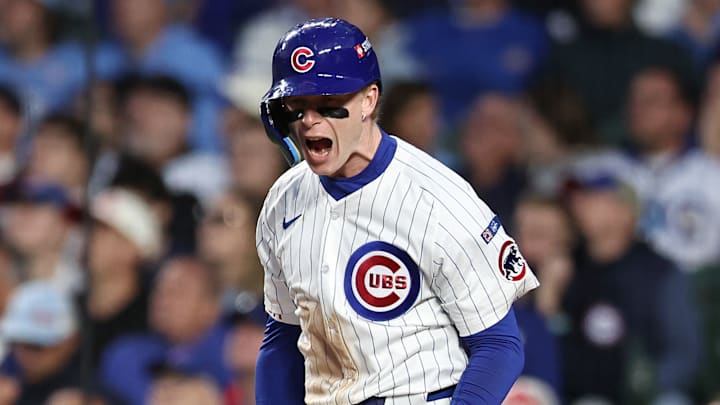
Since the beginning of the offseason, there's been a lot of hand-wringing from Chicago Cubs fans about how the team would improve heading into 2026. Kyle Tucker's departure, coupled with the front office's typical lack of aggression, and a fear that the impending CBA negotiations would spur more short-term spending than real investment, created doubts that Jed Hoyer and company could build on their 92-win season last year. However, what began to look like another year of half-measures after they missed out on Tatsuya Imai turned into their most complete crop of additions in recent memory with the trade for Edward Cabrera and the signing of Alex Bregman.
The Cubs have now managed to accomplish just about everything on their wishlist. They've added a high-upside pitcher for the rotation, a big bat to compensate for Tucker, and rebuilt a bullpen that lost nearly everyone to free agency. Even the bench has been greatly improved, thanks to a savvy addition of Tyler Austin, who's returning from Japan, and a move of Matt Shaw to a super utility role.
It feels fair to start talking about this team as the mythical "next great Cubs team," one that's not here for a haircut, but to win it all. Buoyed by their new additions, stalwart veterans like Ian Happ, Nico Hoerner, and Dansby Swanson, and explosive young talent like Pete Crow-Armstrong and Cade Horton, they have the right combination of pieces to go far. Let's look at three reasons they should be considered as legitimate World Series contenders in 2026.
1. The Cubs have a deep rotation full of upside
When it came time to face the Brewers in the NLDS last year, the Cubs completely ran out of pitching. Injuries to Horton and Justin Steele, coupled with Matthew Boyd wearing down and Shota Imanaga regressing, left them with limited options to start in big games. Just about everyone in the rotation also had to miss time throughout the year, including Javier Assad, who started the season on the shelf. Were it not for the emergence of Horton and the surprising success of Colin Rea, their starting corps threatened to fall apart.
2026 should hopefully not be the same. Injuries can never be predicted, but the Cubs, in theory, have no shortage of depth to weather the storm. The addition of Cabrera already gives them enough arms to keep Rea and Assad in swing man roles for now, even with Steele still recovering from surgery. However, the most important thing the former Marlins starter has to offer is extreme upside. The Cubs have been clamoring to get him in the door because, unlike their other starters, he boasts a fastball in the high 90s with offspeed and breaking pitches that grade among the best in the sport. He's also coming off the best season of his career, with a 3.53 ERA, 3.83 FIP, and a vastly improved 3.14 walks per nine innings.
There's a chance Cabrera breaks out under the guidance of Tommy Hottovy and Tyler Zombro and becomes the new ace of the team, but there's just as much a possibility his injury history bites him again. That's a worthwhile risk to take for this Cubs roster, though. Aside from him, they'll mostly be running back a rotation that ended eighth in baseball in ERA, except now, they'll have a full year of Horton. Even if he's not the 2.67 ERA monster he was in 2025, their starters have all shown an ability to be ace-like at times.
Add in minor league options like Ben Brown and Jordan Wicks, plus rising prospect Jaxon Wiggins, and the Cubs have quite the safety net. The best teams in baseball don't just have top-end starters, but an overabundance of arms they can feel comfortable starting games in a season. In the hands of Craig Counsell, they have enough to keep their best pitchers fresh and in form from game one through the postseason. That depth will also help ease the burdern of the bullpen, too.
2. The lineup has no real holes on paper with a potential superstar
Like the rotation, the Cubs also have no glaring weaknesses in the lineup. The last few years have always seen them lacking in some area, whether it was third base at the start of 2025, as Shaw found his footing, or first base before Michael Busch's arrival. When looking at last year's wRC+, though, only one hitter, Swanson (99), would have a mark under the league average of 100 if they all replicated their results. Topping out the list: Busch, with a .261/.343/.523/140 wRC+ slash line that helped him emerge as one of baseball's best first basemen.
Granted, they don't have anyone with quite the offensive ceiling as Tucker anymore, and they have a few bats with real questions around them. All eyes will be on Crow-Armstrong to see if he can continue to blossom like the superstar he appeared to be in his 131 wRC+ first half, or if he's merely an above-average bat with elite defense and speed like Steamer projects. Moises Ballesteros may also go through some growing pains in his first full season as the designated hitter. The counter is that each has some of the highest upside on the team, with PCA showing last year how he could carry the Cubs at his best.
Both will be surrounded by proven veteran bats to keep the offense humming through their struggles, too. When looking again at Steamer projections, the only regulars pegged for slightly below-average offensive numbers were Swanson and Miguel Amaya, while Busch, Bregman, and Seiya Suzuki led the pack at 124, 121, and 121 wRC+ each. From the starting lineup to even their new bench bat, Austin, the Cubs should have a relentless offense that can hang with just about anyone. If we're once again talking about a scorching hot PCA in MVP conversations at the All-Star break, though, the limit of this group will be our wildest dreams.
3. The Cubs defense will be a game-changer
A big reason why the Cubs squeaked out a Wild Card series win over the San Diego Padres comes down to defense. By the time the Friars were eliminated, Mike Shildt was actively cursing Swanson for beating them with his glove at every turn. It was the culmination of a year of stellar play in the field, which featured a franchise-best three individual Gold Glove wins for Crow-Armstrong, Happ, and Hoerner, and a collective National League Team Gold Glove Award. Looking at the metrics, they placed second with a staggering 84 defensive runs saved and fourth with 29 outs above average.
2026 should be more of the same, but perhaps even better now that they're adding Bregman to the fold. Shaw's glove was a pleasant surprise last year, earning him a Gold Glove nomination as a rookie, but the new third baseman is only a year removed from winning the award himself. Bregman had another solid season at the hot corner with 3 OAA to add to an iron curtain of an infield with Swanson, Hoerner, and Busch. Up the middle may be their strength, with PCA roving like a bat out of hell in center field, but there's nowhere particularly safe on the field to hit the ball.
Whenever Boyd is on the mound with Carson Kelly behind the plate, the Cubs can have at least a Gold Glove nominee at every position save for first base and right field. That is vital considering they just added Cabrera, who, among all pitchers with 130 innings or more, sported the 20th highest ground ball rate at 46.6%. As the saying goes, pitching and defense win championships, so it's hard to bet against the NL's finest fielders when the lights are brightest.
 Add us as a preferred source on Google