%20%20--%3E%0A%3Csvg%20version%3D%221.1%22%20xmlns%3D%22http%3A%2F%2Fwww.w3.org%2F2000%2Fsvg%22%20xmlns%3Axlink%3D%22http%3A%2F%2Fwww.w3.org%2F1999%2Fxlink%22%20x%3D%220px%22%20y%3D%220px%22%0A%09%20viewBox%3D%220%200%201092.7%20200%22%20style%3D%22enable-background%3Anew%200%200%201092.7%20200%3B%22%20xml%3Aspace%3D%22preserve%22%3E%0A%3Cstyle%20type%3D%22text%2Fcss%22%3E%0A%09.st0%7Bfill%3A%23231F20%3B%7D%0A%09.st1%7Bfill%3A%23293576%3B%7D%0A%09.st2%7Bfill%3A%23C82C2D%3B%7D%0A%09.st3%7Bfill%3A%23FFFFFF%3B%7D%0A%3C%2Fstyle%3E%0A%3Cg%20id%3D%22Template%22%3E%0A%3C%2Fg%3E%0A%3Cg%20id%3D%22Layer_2%22%3E%0A%09%3Cpolygon%20class%3D%22st3%22%20points%3D%2256.8%2C78.5%2073.1%2C78.5%2085.5%2C78.5%2085.5%2C36.3%2085.5%2C0%2068.8%2C0%2064.9%2C6.2%2063.3%2C8.7%2052%2C0%2025.5%2C0%2021.8%2C3.8%20%0A%09%092%2C23.8%202%2C176.2%2025%2C200%2061.5%2C200%2085.5%2C176.2%2085.5%2C121.5%2056.8%2C121.5%2056.8%2C176.2%2039.5%2C176.2%2039.5%2C32.4%2039.5%2C23.8%2056.8%2C23.8%2056.8%2C57.2%20%0A%09%09%09%22%2F%3E%0A%09%3Cpolygon%20class%3D%22st3%22%20points%3D%22143.9%2C104.2%20143.9%2C48.1%20143.9%2C24.2%20152.1%2C24.2%20153.2%2C24.2%20153.2%2C0%20152.1%2C0%20106.8%2C0%2093.9%2C0%2093.9%2C24.2%20%0A%09%09106.7%2C24.2%20106.7%2C63.4%20106.7%2C116.9%20106.7%2C175.8%20130.4%2C200%20169.2%2C200%20183%2C184.8%20191.2%2C175.8%20191.2%2C146.2%20191.2%2C96.1%20191.2%2C24.2%20%0A%09%09201.4%2C24.2%20201.4%2C0%20163.7%2C0%20158.7%2C0%20158.7%2C24.2%20163.7%2C24.2%20169.2%2C24.2%20169.2%2C75.2%20169.2%2C127.8%20169.2%2C174.1%20169.2%2C175.8%20%0A%09%09143.9%2C175.8%20143.9%2C152.9%20%09%22%2F%3E%0A%09%3Cpath%20class%3D%22st3%22%20d%3D%22M220.3%2C168v8.3h-10.5V200h62.1h12.7l28.5-23.8v-66l-5.2-5.1l-7.8-7.6l7.8-7.8l2.5-2.5V60V25.7%0A%09%09c0%2C0.7-8.6-7.9-25.7-25.7h-43H230h-20.2v23.8h10.5v96.7V168z%20M257.5%2C23.8h22.2v60.5h-22.2V23.8z%20M257.5%2C110.3h22.2v50.2v15.8h-22.2%0A%09%09v-29.4V110.3z%22%2F%3E%0A%09%3Cpath%20class%3D%22st3%22%20d%3D%22M331.9%2C176.2h-10.5v6V200h42.8h21.4h10.5l1-0.9l27.4-22.9v-56.9v-9.1l-13-12.8l10.3-10.2V25.7%0A%09%09c0%2C0.7-8.6-7.9-25.7-25.7h-74.8v23.8h10.5V45V176.2z%20M391.4%2C176.2h-5.8h-16.5v-66h22.2v17.9V176.2z%20M369.2%2C23.8h22.2v60.5H376h-6.9%0A%09%09v-5.6V23.8z%22%2F%3E%0A%09%3Cpolygon%20class%3D%22st3%22%20points%3D%22443.3%2C175.8%20433%2C175.8%20433%2C200%20463.5%2C200%20475%2C200%20489.5%2C200%20489.5%2C175.8%20480%2C175.8%20480%2C147.6%20%0A%09%09480%2C25.5%20489.5%2C25.5%20489.5%2C0%20433%2C0%20433%2C25.5%20443.3%2C25.5%20443.3%2C130.4%20%09%22%2F%3E%0A%09%3Cpolygon%20class%3D%22st3%22%20points%3D%22505.6%2C175.8%20497.9%2C175.8%20497.9%2C200%20541.3%2C200%20552.9%2C200%20583.6%2C200%20595.1%2C187.7%20595.1%2C153.9%20%0A%09%09595.1%2C140.7%20566.9%2C140.7%20566.9%2C159.5%20566.9%2C175.8%20542.6%2C175.8%20542.6%2C160.5%20542.6%2C115.8%20556.6%2C115.8%20556.6%2C133%20580.1%2C133%20%0A%09%09580.1%2C67.7%20556.6%2C67.7%20556.6%2C85%20542.6%2C85%20542.6%2C25.5%20566.9%2C25.5%20566.9%2C60.8%20595.1%2C60.8%20595.1%2C0%20497.9%2C0%20497.9%2C25.5%20505.6%2C25.5%20%0A%09%09505.6%2C155.6%20%09%22%2F%3E%0A%09%3Cpolygon%20class%3D%22st3%22%20points%3D%22682.8%2C73.5%20682.8%2C0%20669.5%2C0%20659%2C5.5%20652.7%2C0%20627.3%2C0%20603.5%2C24.2%20603.5%2C91.7%20628.1%2C116.2%20654.3%2C116.2%20%0A%09%09654.3%2C128.5%20654.3%2C176.2%20630.8%2C176.2%20630.8%2C140.6%20630.8%2C128.7%20604.5%2C128.7%20604.5%2C151%20604.5%2C200%20619.1%2C200%20625%2C200%20629.8%2C195.2%20%0A%09%09630.7%2C195.9%20637%2C200%20666.3%2C200%20687.5%2C176.2%20687.5%2C107.3%20687.5%2C106.8%20667%2C83%20635.5%2C83%20635.5%2C24.2%20656.8%2C24.2%20656.8%2C73.5%20%09%22%2F%3E%0A%09%3Cpolygon%20class%3D%22st2%22%20points%3D%22774%2C78.5%20774.8%2C78.5%20786.4%2C78.5%20802.8%2C78.5%20802.8%2C0.7%20802.8%2C0%20786%2C0%20780.5%2C8.7%20769.3%2C0%20742.8%2C0%20%0A%09%09719.3%2C23.8%20719.3%2C83.3%20719.3%2C176.2%20739%2C196.6%20742.3%2C200%20778.8%2C200%20802.8%2C176.2%20802.8%2C167%20802.8%2C121.5%20786.4%2C121.5%20774.8%2C121.5%20%0A%09%09774%2C121.5%20774%2C176.2%20756.8%2C176.2%20756.8%2C50.3%20756.8%2C23.8%20774%2C23.8%20774%2C33.1%20%09%22%2F%3E%0A%09%3Cpath%20class%3D%22st2%22%20d%3D%22M821.4%2C176.2h-10.2V200h11.2h45.8v-23.8h-6.5h-3v-65h5.5h11.7v7.6v47.7v9.7l14.7%2C23.3l0.3%2C0.4h25.2v-19v-4.8%0A%09%09h-5.5V140v-25.6l-13.3-13.3l-0.2-0.2l2.2-1.5l11.3-7.8v-2.5V24.2L882.4%2C0h-18.2h-11.6h-41.5v24.2h10.2v132.1V176.2z%20M858.7%2C24.2%0A%09%09h5.5h12.5V87h-12.5h-5.5V24.2z%22%2F%3E%0A%09%3Cpolygon%20class%3D%22st2%22%20points%3D%22934.8%2C166.2%20934.8%2C175.8%20924.5%2C175.8%20924.5%2C200%20981%2C200%20981%2C175.8%20971.5%2C175.8%20971.5%2C133.1%20%0A%09%09971.5%2C81.9%20971.5%2C25.5%20981%2C25.5%20981%2C9.1%20981%2C0%20942%2C0%20930.5%2C0%20924.5%2C0%20924.5%2C25.5%20930.5%2C25.5%20934.8%2C25.5%20934.8%2C119%20%09%22%2F%3E%0A%09%3Cpath%20class%3D%22st2%22%20d%3D%22M1089.9%2C87.2V25.7c0%2C0.6-6.4-5.8-19.3-19c-2-2.1-4.2-4.3-6.5-6.7h-31h-43.7v23.8h10.5v24.2v55.5v72.8h-10.5%0A%09%09V200h74.8l28.5-23.8v-66l-13-12.8L1089.9%2C87.2z%20M1059.4%2C176.2h-22.2v-66h22.2V176.2z%20M1059.4%2C84.2h-22.2V57.5V23.8h22.2V25V84.2z%22%0A%09%09%2F%3E%0A%3C%2Fg%3E%0A%3C%2Fsvg%3E%0A)

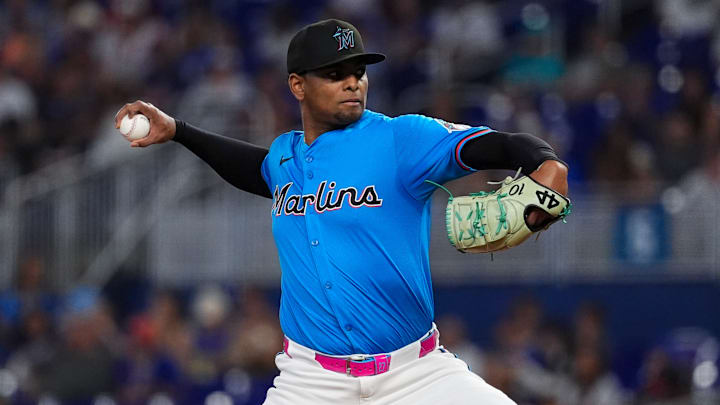
It finally happened. The Chicago Cubs have acquired a front-end starting pitcher. The team swung a trade for Miami Marlins righty Edward Cabrera, a power arm with a very high ceiling and some of the nastiest stuff in the league.
My first impression is that this is a very favorable trade for the Cubs, who have arguably needed to acquire another topline starter since before last season began. Here we are a year-and-a-half later, and we finally have what we wanted. One of the most desirable pitchers on the market will don a Chicago Cubs uniform this year.
For fairness's sake, there are a couple of minor things to be concerned about, so let's unpack what I love and hate about this trade.
Love: The Cubs have a starter with true ace potential
As Cabrera comes to the Cubs, he is viewed as a starting pitcher with a ton of potential. The right-hander features a balanced five-pitch arsenal, with his changeup, curveball, and sinker being the primary deliveries. The movement and speed of his pitches are fun to watch, and they give the Cubs a true power pitcher capable of fooling hitters and racking up strikeouts (career 25.9% strikeout rate).
Pitching porn...What a sequence by Edward Cabrera to finish off his 7th scoreless inning 😍
— Fish On First (@FishOnFirst) July 2, 2025
- 96 mph sinker, dotted
- 89 mph slider for a chase
- 96 mph changeup, too tempting to take pic.twitter.com/AIpMcne370
Cabrera's career 4.07 ERA doesn't do him justice, as he has likely yet to reach his full potential in the majors.
Hate: Cabrera's health track record is spotty
Most of the setbacks Cabera has suffered have mostly been due to elbow and shoulder injuries. The 2025 season was the first time Cabrera was able to log more than 100 innings in the majors (137.2), so that is something to keep in mind moving forward.
Unfortunately, the Cubs weren't able to address this need by acquiring a more durable arm. It would have certainly made me feel more at ease if, say, Dylan Cease were slotting into the Cubs rotation next year. With that being said, Cabrera trended in the right direction with his innings pitched and frankly, his ERA last year (3.53). So hopefully, his medicals told the Cubs that he is ready to become more of an innings-eater in the future.
Love: Cabrera is under team control through 2028
This is a big one. The Cubs have three starting pitchers set to reach free agency after the 2026 season, including Shota Imanaga, Jameson Taillon and Matthew Boyd. But with Cabrera on the books for three years, the team has a much better foundation to field a winning team post-26, along with Cade Horton, Justin Steele, and, potentially, Jaxon Wiggins.
Hate: The Cubs' need for a big bat is larger now
So before this trade, the Cubs needed a bat to replace Kyle Tucker's production in the lineup (and his defense in right field). With the team bowing out of top free agents all winter, it's looking like they are still unwilling to commit the money and years it takes to sign a high-end player. That's why most fans felt that the team would pretty much roll with the same lineup from 2025 with Owen Caissie replacing Tucker in right field.
But with Caissie heading to Miami, things have changed and the Cubs are in even more need of a quality bat. There's no predicting how well Caissie will perform in a full MLB season, and he certainly won't live up to a perennial All-Star like Tucker. At least not right away if at all. But he was at least there to fill the spot and play solid defense.
With what the Cubs have now, it's likely that Seiya Suzuki will return to full-time duties in right field and the Cubs go with a rookie like Moises Ballesteros to be the designated hitter. I'd prefer to see the front office pursue a reunion with Cody Bellinger. Or hell, even Tucker. But both guys are looking for large contracts and multiple years of commitment this offseason. And the Cubs have yet to prove to anyone they are willing to pony up like that.
Love: The trade package was fairly cheap for the Cubs
On the upside, Caissie was the only highly touted prospect the Cubs had to part with. The Cubs also sent High-A shortstop Christian Hernandez and 18-year-old infielder Edgardo De Leon to the Marlins in the trade.
Hernandez features great speed and defense, but his bat has yet to catch up with his other tools (career .701 OPS over five seasons in the minor leagues). He's been a top-15 prospect in the Cubs' system for a few years now, and there's still time for him to develop as he enters his age-22 season, but we're likely years away from that happening, so he was expendable for the Cubs.
It's a similar situation with De Leon, who just signed with the Cubs as an international free agent before the 2024 season. De Leon will be 19 in February, and he has yet to advance past rookie ball in the minors. So again, this is a guy the organization is very comfortable moving for an impact starting pitcher like Cabrera.
Given the seemingly astronomical asking price for starting pitching at last year's trade deadline, which hindered the Cubs and others from acquiring starting pitching, it feels like Jed Hoyer made this move at the perfect time.
 Add us as a preferred source on Google