%20%20--%3E%0A%3Csvg%20version%3D%221.1%22%20xmlns%3D%22http%3A%2F%2Fwww.w3.org%2F2000%2Fsvg%22%20xmlns%3Axlink%3D%22http%3A%2F%2Fwww.w3.org%2F1999%2Fxlink%22%20x%3D%220px%22%20y%3D%220px%22%0A%09%20viewBox%3D%220%200%201092.7%20200%22%20style%3D%22enable-background%3Anew%200%200%201092.7%20200%3B%22%20xml%3Aspace%3D%22preserve%22%3E%0A%3Cstyle%20type%3D%22text%2Fcss%22%3E%0A%09.st0%7Bfill%3A%23231F20%3B%7D%0A%09.st1%7Bfill%3A%23293576%3B%7D%0A%09.st2%7Bfill%3A%23C82C2D%3B%7D%0A%09.st3%7Bfill%3A%23FFFFFF%3B%7D%0A%3C%2Fstyle%3E%0A%3Cg%20id%3D%22Template%22%3E%0A%3C%2Fg%3E%0A%3Cg%20id%3D%22Layer_2%22%3E%0A%09%3Cpolygon%20class%3D%22st3%22%20points%3D%2256.8%2C78.5%2073.1%2C78.5%2085.5%2C78.5%2085.5%2C36.3%2085.5%2C0%2068.8%2C0%2064.9%2C6.2%2063.3%2C8.7%2052%2C0%2025.5%2C0%2021.8%2C3.8%20%0A%09%092%2C23.8%202%2C176.2%2025%2C200%2061.5%2C200%2085.5%2C176.2%2085.5%2C121.5%2056.8%2C121.5%2056.8%2C176.2%2039.5%2C176.2%2039.5%2C32.4%2039.5%2C23.8%2056.8%2C23.8%2056.8%2C57.2%20%0A%09%09%09%22%2F%3E%0A%09%3Cpolygon%20class%3D%22st3%22%20points%3D%22143.9%2C104.2%20143.9%2C48.1%20143.9%2C24.2%20152.1%2C24.2%20153.2%2C24.2%20153.2%2C0%20152.1%2C0%20106.8%2C0%2093.9%2C0%2093.9%2C24.2%20%0A%09%09106.7%2C24.2%20106.7%2C63.4%20106.7%2C116.9%20106.7%2C175.8%20130.4%2C200%20169.2%2C200%20183%2C184.8%20191.2%2C175.8%20191.2%2C146.2%20191.2%2C96.1%20191.2%2C24.2%20%0A%09%09201.4%2C24.2%20201.4%2C0%20163.7%2C0%20158.7%2C0%20158.7%2C24.2%20163.7%2C24.2%20169.2%2C24.2%20169.2%2C75.2%20169.2%2C127.8%20169.2%2C174.1%20169.2%2C175.8%20%0A%09%09143.9%2C175.8%20143.9%2C152.9%20%09%22%2F%3E%0A%09%3Cpath%20class%3D%22st3%22%20d%3D%22M220.3%2C168v8.3h-10.5V200h62.1h12.7l28.5-23.8v-66l-5.2-5.1l-7.8-7.6l7.8-7.8l2.5-2.5V60V25.7%0A%09%09c0%2C0.7-8.6-7.9-25.7-25.7h-43H230h-20.2v23.8h10.5v96.7V168z%20M257.5%2C23.8h22.2v60.5h-22.2V23.8z%20M257.5%2C110.3h22.2v50.2v15.8h-22.2%0A%09%09v-29.4V110.3z%22%2F%3E%0A%09%3Cpath%20class%3D%22st3%22%20d%3D%22M331.9%2C176.2h-10.5v6V200h42.8h21.4h10.5l1-0.9l27.4-22.9v-56.9v-9.1l-13-12.8l10.3-10.2V25.7%0A%09%09c0%2C0.7-8.6-7.9-25.7-25.7h-74.8v23.8h10.5V45V176.2z%20M391.4%2C176.2h-5.8h-16.5v-66h22.2v17.9V176.2z%20M369.2%2C23.8h22.2v60.5H376h-6.9%0A%09%09v-5.6V23.8z%22%2F%3E%0A%09%3Cpolygon%20class%3D%22st3%22%20points%3D%22443.3%2C175.8%20433%2C175.8%20433%2C200%20463.5%2C200%20475%2C200%20489.5%2C200%20489.5%2C175.8%20480%2C175.8%20480%2C147.6%20%0A%09%09480%2C25.5%20489.5%2C25.5%20489.5%2C0%20433%2C0%20433%2C25.5%20443.3%2C25.5%20443.3%2C130.4%20%09%22%2F%3E%0A%09%3Cpolygon%20class%3D%22st3%22%20points%3D%22505.6%2C175.8%20497.9%2C175.8%20497.9%2C200%20541.3%2C200%20552.9%2C200%20583.6%2C200%20595.1%2C187.7%20595.1%2C153.9%20%0A%09%09595.1%2C140.7%20566.9%2C140.7%20566.9%2C159.5%20566.9%2C175.8%20542.6%2C175.8%20542.6%2C160.5%20542.6%2C115.8%20556.6%2C115.8%20556.6%2C133%20580.1%2C133%20%0A%09%09580.1%2C67.7%20556.6%2C67.7%20556.6%2C85%20542.6%2C85%20542.6%2C25.5%20566.9%2C25.5%20566.9%2C60.8%20595.1%2C60.8%20595.1%2C0%20497.9%2C0%20497.9%2C25.5%20505.6%2C25.5%20%0A%09%09505.6%2C155.6%20%09%22%2F%3E%0A%09%3Cpolygon%20class%3D%22st3%22%20points%3D%22682.8%2C73.5%20682.8%2C0%20669.5%2C0%20659%2C5.5%20652.7%2C0%20627.3%2C0%20603.5%2C24.2%20603.5%2C91.7%20628.1%2C116.2%20654.3%2C116.2%20%0A%09%09654.3%2C128.5%20654.3%2C176.2%20630.8%2C176.2%20630.8%2C140.6%20630.8%2C128.7%20604.5%2C128.7%20604.5%2C151%20604.5%2C200%20619.1%2C200%20625%2C200%20629.8%2C195.2%20%0A%09%09630.7%2C195.9%20637%2C200%20666.3%2C200%20687.5%2C176.2%20687.5%2C107.3%20687.5%2C106.8%20667%2C83%20635.5%2C83%20635.5%2C24.2%20656.8%2C24.2%20656.8%2C73.5%20%09%22%2F%3E%0A%09%3Cpolygon%20class%3D%22st2%22%20points%3D%22774%2C78.5%20774.8%2C78.5%20786.4%2C78.5%20802.8%2C78.5%20802.8%2C0.7%20802.8%2C0%20786%2C0%20780.5%2C8.7%20769.3%2C0%20742.8%2C0%20%0A%09%09719.3%2C23.8%20719.3%2C83.3%20719.3%2C176.2%20739%2C196.6%20742.3%2C200%20778.8%2C200%20802.8%2C176.2%20802.8%2C167%20802.8%2C121.5%20786.4%2C121.5%20774.8%2C121.5%20%0A%09%09774%2C121.5%20774%2C176.2%20756.8%2C176.2%20756.8%2C50.3%20756.8%2C23.8%20774%2C23.8%20774%2C33.1%20%09%22%2F%3E%0A%09%3Cpath%20class%3D%22st2%22%20d%3D%22M821.4%2C176.2h-10.2V200h11.2h45.8v-23.8h-6.5h-3v-65h5.5h11.7v7.6v47.7v9.7l14.7%2C23.3l0.3%2C0.4h25.2v-19v-4.8%0A%09%09h-5.5V140v-25.6l-13.3-13.3l-0.2-0.2l2.2-1.5l11.3-7.8v-2.5V24.2L882.4%2C0h-18.2h-11.6h-41.5v24.2h10.2v132.1V176.2z%20M858.7%2C24.2%0A%09%09h5.5h12.5V87h-12.5h-5.5V24.2z%22%2F%3E%0A%09%3Cpolygon%20class%3D%22st2%22%20points%3D%22934.8%2C166.2%20934.8%2C175.8%20924.5%2C175.8%20924.5%2C200%20981%2C200%20981%2C175.8%20971.5%2C175.8%20971.5%2C133.1%20%0A%09%09971.5%2C81.9%20971.5%2C25.5%20981%2C25.5%20981%2C9.1%20981%2C0%20942%2C0%20930.5%2C0%20924.5%2C0%20924.5%2C25.5%20930.5%2C25.5%20934.8%2C25.5%20934.8%2C119%20%09%22%2F%3E%0A%09%3Cpath%20class%3D%22st2%22%20d%3D%22M1089.9%2C87.2V25.7c0%2C0.6-6.4-5.8-19.3-19c-2-2.1-4.2-4.3-6.5-6.7h-31h-43.7v23.8h10.5v24.2v55.5v72.8h-10.5%0A%09%09V200h74.8l28.5-23.8v-66l-13-12.8L1089.9%2C87.2z%20M1059.4%2C176.2h-22.2v-66h22.2V176.2z%20M1059.4%2C84.2h-22.2V57.5V23.8h22.2V25V84.2z%22%0A%09%09%2F%3E%0A%3C%2Fg%3E%0A%3C%2Fsvg%3E%0A)

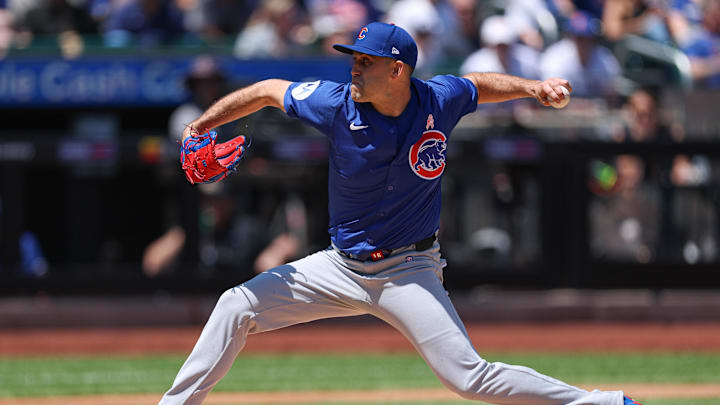
There’s no denying that the first half of the 2025 Cubs’ season was successful. They hit the break at 57-39. They are in first place in the NL Central, albeit by only one game ahead of the surging Milwaukee Brewers. Their .594 winning percentage is the team’s best at the break since 2016, which is a very nice Cub season to be ‘best since…’.
How’d things get to this cheerful point? Here’s a brief look back at seven games that shaped the first half of the Cubs’ season.
7 games that defined the Chicago Cubs' first half
March 31. Cubs vs. Athletics, Sacramento
It’s easy to forget now, but the first week’s worth of games was no fun. The Cubs lost both parts of their soiree to Tokyo to play the Dodgers, and followed that with a split in Phoenix that left them at a wobbly 2-4.
But they welcomed the nomadic Athletics into that team’s temporary digs by trying out a new identity: sluggers. Crushing 21 hits around the A’s minor league home park, they scored four runs in the top of the first and never looked back on the way to an 18-3 attention-getting victory.
The assault began early. Against unfortunate A’s starter Joey Estes, Ian Happ led off by drawing a walk, Kyle Tucker doubled him to third, and Seiya Suzuki’s sacrifice fly got the first run home. Michael Busch tested the limits of the dimensions of Sutter Health Park and found them inadequate to contain his power, then Dansby Swanson performed the same experiment with the same result.
Before the night was out, Tucker and Carson Kelly had also homered, representing four of the team’s 11 extra-base hits. By the time the team left Sacramento two nights later, they were above .500 and just a half game out of first place.
April 12. Cubs vs. Dodgers, Los Angeles
The Cubs entered the Saturday night game in a virtual tie with Milwaukee for the division lead. The pitching matchup, however, was not favorable: Ben Brown, with his 7.71 ERA against Dodger rookie sensation Roki Sasaki, who had presided over one of the Dodger victories in Tokyo.
Then a funny thing happened; a bunch of funny things, really. Brown pitched his best ball of the year, lasting six shutout innings and looking every bit like an actual major league pitcher. Busch’s second inning home run gave the Cubs an early lead, and after Sasaki departed in the sixth they added a second run.
The Dodger pen was supposed to be a major asset, but bullpens can be unpredictable. From the seventh inning through game’s end, Cubs batters torched the supposedly superior Dodger pen for 17 hits and 15 runs, although in fairness to the Dodger pen seven of those hits and five of those runs came in the ninth off shortstop-turned-pitcher Miguel Rojas.
More significantly, the Cubs walked off the Dodger Stadium turf that night having accomplished two important things. They buried in a very public way the notion that the Dodgers were some sort of super team, and in doing so they took over sole possession of the NL Central lead. They have not surrendered that 100 percent share since.
April 18. Cubs vs. Diamondbacks, Wrigley Field
How does a team give up 10 runs in a single inning and still win? As unlikely as it sounds, that’s what the Cubs did on a Friday afternoon in front of 39,000 unbelieving but happy witnesses.
If the game did nothing else, it demonstrated the club’s determination.
For much of the afternoon, this game looked like a tough win, then it morphed into a rout, and then morphed again into a looming and utterly dis-spiriting loss. Behind Colin Rea and three relievers, the Cubs took a 2-1 lead into the bottom of the seventh, when they opened up a five-run explosion to make it 7-1. Easy Street, right?
Not so fast. In the top of the eighth, 10 of the first 12 – yes, 10 of 12 – Arizona batters reached base, their hits including a Eugenio Suarez grand slam, a Randal Grichuk double that shoved Arizona in front and a Lourdes Gurriel three-run homer that made it 11-7. When the inning began the Cubs had a 99 percent chance of winning the game. When it ended, the odds of a Cubs win were four percent.
But, in the bottom of the eighth, the chastened Cubs returned fire. Carson Kelly, Kyle Tucker and Seiya Suzuki all homered, and suddenly the Cubs were back in command 13-11. When Ryan Pressly restored order in the ninth, that was the final score.
Carson Kelly hits ANOTHER home run 🤯
— Marquee Sports Network (@WatchMarquee) April 18, 2025
He leads the @Cubs with 6 home runs. pic.twitter.com/efntvIkrft
April 22. Cubs vs. Dodgers, Wrigley Field
As extraordinary as that last game was, it may not have been the most extraordinary of the homestand. Four days later, the Dodgers arrived for a battle of division leaders and they hit Cubs starer Shota Imanaga for three runs in the top of the first.
Having demonstrated to the D-backs hat they were not easily intimidated, the Cubs struck back for five runs off Dodger starter Dustin May, with Seiya Suzuki, Dansby Swanson, Pete Crow-Armstrong and Miguel Amaya all driving in runs.
And so it went, the teams trading punches until LA exploded for five runs in the top of the seventh to take a 10-7 lead. Naturally, the Cubs returned fire, Tucker delivering a two-run home run in the eighth. Then with two out in the bottom of the ninth, Miguel Amaya took Tanner Scott into the center field bushes for a game-tying homer.
In the 10th, Porter Hodge stifled the Dodgers, opening the way for Ian Happ’s base hit to send Vidal Brujan home with the decider in a remarkable 11-10 Cub victory.
May 2. Cubs vs. Brewers, Milwaukee
The Brewers are two-time defending divisional champions. The Brewers entered this first 2025 meeting of the contenders just three games behind the Cubs. If there was one team the Cubs had to demonstrate they could beat, it was Milwaukee.
The Cubs didn’t beat the Brewers, they thrashed them. It was quick and merciless. They KO'd Tyler Alexander with two first inning runs, then lit up reliever Quinn Priester for seven more in the second to the mixed pleasure-dismay of 34,000 fans of both teams.
Pete Crow-Armstrong homered twice, Michael Busch homered once, and Busch had four RBIs before the final out of the second inning was recorded. The final score? It was 10-0.
The Cubs won the series and they begin the second half with a 3-2 advantage over the Brewers.
May 11. Cubs vs. Mets, New York
When Justin Steele went down in April, the Cubs had to have somebody step forward. They tried Ben Brown, who was at best spotty. They tried Colin Rea, who has been adequate. They called up Cade Horton, who has looked like a rookie with potential. Then, they gave the ball to Matthew Boyd.
The start that really shoved the veteran left hander into the first-rank consciousness of both the team and the league occurred at Citi Field, ironically in a defeat.
Facing Griffin Canning, Boyd lasted six innings, scattering six hits but just one run while striking out eight… and doing so in the media-heavy New York environment. Coming in his eighth start, it lowered his ERA to 2.78, a team-leading figure that was becoming impossible to ignore.
Manager Craig Counsell pulled Boyd after six, the teams tied at 2-2. In the eighth, the Mets got to Porter Hodge and Gavin Hollowell for four runs and a 6-2 win. But if the Cubs lost the game, they at least found an ace.
June 25. Cubs vs. Cardinals. St. Louis
Sometimes you need a strong purgative. One night earlier, the Cubs had played their most egregiously bad baseball of the season. Forgetting how many outs there were, Pete Crow-Armstrong lolly-gagged after catching a deep fly ball and allowed Masyn Winn to score from second base with what turned out to be a pivotal run in an 8-7 Cub defeat.
The team’s haphazardly played second straight loss to St. Louis and fifth in six games could have instigated a slide. Instead, one night later, the Cubs rallied in a most forceful fashion.
With Matthew Boyd facing Erick Fedde, the Cubs scored in each of the first five innings and coasted to an 8-0 victory. Ian Happ, Kyle Tucker and Reese McGuire all homered, and the team secured the victory, which touched off a string of seven wins in nine games.
 Add us as a preferred source on Google