%20%20--%3E%0A%3Csvg%20version%3D%221.1%22%20xmlns%3D%22http%3A%2F%2Fwww.w3.org%2F2000%2Fsvg%22%20xmlns%3Axlink%3D%22http%3A%2F%2Fwww.w3.org%2F1999%2Fxlink%22%20x%3D%220px%22%20y%3D%220px%22%0A%09%20viewBox%3D%220%200%201092.7%20200%22%20style%3D%22enable-background%3Anew%200%200%201092.7%20200%3B%22%20xml%3Aspace%3D%22preserve%22%3E%0A%3Cstyle%20type%3D%22text%2Fcss%22%3E%0A%09.st0%7Bfill%3A%23231F20%3B%7D%0A%09.st1%7Bfill%3A%23293576%3B%7D%0A%09.st2%7Bfill%3A%23C82C2D%3B%7D%0A%09.st3%7Bfill%3A%23FFFFFF%3B%7D%0A%3C%2Fstyle%3E%0A%3Cg%20id%3D%22Template%22%3E%0A%3C%2Fg%3E%0A%3Cg%20id%3D%22Layer_2%22%3E%0A%09%3Cpolygon%20class%3D%22st3%22%20points%3D%2256.8%2C78.5%2073.1%2C78.5%2085.5%2C78.5%2085.5%2C36.3%2085.5%2C0%2068.8%2C0%2064.9%2C6.2%2063.3%2C8.7%2052%2C0%2025.5%2C0%2021.8%2C3.8%20%0A%09%092%2C23.8%202%2C176.2%2025%2C200%2061.5%2C200%2085.5%2C176.2%2085.5%2C121.5%2056.8%2C121.5%2056.8%2C176.2%2039.5%2C176.2%2039.5%2C32.4%2039.5%2C23.8%2056.8%2C23.8%2056.8%2C57.2%20%0A%09%09%09%22%2F%3E%0A%09%3Cpolygon%20class%3D%22st3%22%20points%3D%22143.9%2C104.2%20143.9%2C48.1%20143.9%2C24.2%20152.1%2C24.2%20153.2%2C24.2%20153.2%2C0%20152.1%2C0%20106.8%2C0%2093.9%2C0%2093.9%2C24.2%20%0A%09%09106.7%2C24.2%20106.7%2C63.4%20106.7%2C116.9%20106.7%2C175.8%20130.4%2C200%20169.2%2C200%20183%2C184.8%20191.2%2C175.8%20191.2%2C146.2%20191.2%2C96.1%20191.2%2C24.2%20%0A%09%09201.4%2C24.2%20201.4%2C0%20163.7%2C0%20158.7%2C0%20158.7%2C24.2%20163.7%2C24.2%20169.2%2C24.2%20169.2%2C75.2%20169.2%2C127.8%20169.2%2C174.1%20169.2%2C175.8%20%0A%09%09143.9%2C175.8%20143.9%2C152.9%20%09%22%2F%3E%0A%09%3Cpath%20class%3D%22st3%22%20d%3D%22M220.3%2C168v8.3h-10.5V200h62.1h12.7l28.5-23.8v-66l-5.2-5.1l-7.8-7.6l7.8-7.8l2.5-2.5V60V25.7%0A%09%09c0%2C0.7-8.6-7.9-25.7-25.7h-43H230h-20.2v23.8h10.5v96.7V168z%20M257.5%2C23.8h22.2v60.5h-22.2V23.8z%20M257.5%2C110.3h22.2v50.2v15.8h-22.2%0A%09%09v-29.4V110.3z%22%2F%3E%0A%09%3Cpath%20class%3D%22st3%22%20d%3D%22M331.9%2C176.2h-10.5v6V200h42.8h21.4h10.5l1-0.9l27.4-22.9v-56.9v-9.1l-13-12.8l10.3-10.2V25.7%0A%09%09c0%2C0.7-8.6-7.9-25.7-25.7h-74.8v23.8h10.5V45V176.2z%20M391.4%2C176.2h-5.8h-16.5v-66h22.2v17.9V176.2z%20M369.2%2C23.8h22.2v60.5H376h-6.9%0A%09%09v-5.6V23.8z%22%2F%3E%0A%09%3Cpolygon%20class%3D%22st3%22%20points%3D%22443.3%2C175.8%20433%2C175.8%20433%2C200%20463.5%2C200%20475%2C200%20489.5%2C200%20489.5%2C175.8%20480%2C175.8%20480%2C147.6%20%0A%09%09480%2C25.5%20489.5%2C25.5%20489.5%2C0%20433%2C0%20433%2C25.5%20443.3%2C25.5%20443.3%2C130.4%20%09%22%2F%3E%0A%09%3Cpolygon%20class%3D%22st3%22%20points%3D%22505.6%2C175.8%20497.9%2C175.8%20497.9%2C200%20541.3%2C200%20552.9%2C200%20583.6%2C200%20595.1%2C187.7%20595.1%2C153.9%20%0A%09%09595.1%2C140.7%20566.9%2C140.7%20566.9%2C159.5%20566.9%2C175.8%20542.6%2C175.8%20542.6%2C160.5%20542.6%2C115.8%20556.6%2C115.8%20556.6%2C133%20580.1%2C133%20%0A%09%09580.1%2C67.7%20556.6%2C67.7%20556.6%2C85%20542.6%2C85%20542.6%2C25.5%20566.9%2C25.5%20566.9%2C60.8%20595.1%2C60.8%20595.1%2C0%20497.9%2C0%20497.9%2C25.5%20505.6%2C25.5%20%0A%09%09505.6%2C155.6%20%09%22%2F%3E%0A%09%3Cpolygon%20class%3D%22st3%22%20points%3D%22682.8%2C73.5%20682.8%2C0%20669.5%2C0%20659%2C5.5%20652.7%2C0%20627.3%2C0%20603.5%2C24.2%20603.5%2C91.7%20628.1%2C116.2%20654.3%2C116.2%20%0A%09%09654.3%2C128.5%20654.3%2C176.2%20630.8%2C176.2%20630.8%2C140.6%20630.8%2C128.7%20604.5%2C128.7%20604.5%2C151%20604.5%2C200%20619.1%2C200%20625%2C200%20629.8%2C195.2%20%0A%09%09630.7%2C195.9%20637%2C200%20666.3%2C200%20687.5%2C176.2%20687.5%2C107.3%20687.5%2C106.8%20667%2C83%20635.5%2C83%20635.5%2C24.2%20656.8%2C24.2%20656.8%2C73.5%20%09%22%2F%3E%0A%09%3Cpolygon%20class%3D%22st2%22%20points%3D%22774%2C78.5%20774.8%2C78.5%20786.4%2C78.5%20802.8%2C78.5%20802.8%2C0.7%20802.8%2C0%20786%2C0%20780.5%2C8.7%20769.3%2C0%20742.8%2C0%20%0A%09%09719.3%2C23.8%20719.3%2C83.3%20719.3%2C176.2%20739%2C196.6%20742.3%2C200%20778.8%2C200%20802.8%2C176.2%20802.8%2C167%20802.8%2C121.5%20786.4%2C121.5%20774.8%2C121.5%20%0A%09%09774%2C121.5%20774%2C176.2%20756.8%2C176.2%20756.8%2C50.3%20756.8%2C23.8%20774%2C23.8%20774%2C33.1%20%09%22%2F%3E%0A%09%3Cpath%20class%3D%22st2%22%20d%3D%22M821.4%2C176.2h-10.2V200h11.2h45.8v-23.8h-6.5h-3v-65h5.5h11.7v7.6v47.7v9.7l14.7%2C23.3l0.3%2C0.4h25.2v-19v-4.8%0A%09%09h-5.5V140v-25.6l-13.3-13.3l-0.2-0.2l2.2-1.5l11.3-7.8v-2.5V24.2L882.4%2C0h-18.2h-11.6h-41.5v24.2h10.2v132.1V176.2z%20M858.7%2C24.2%0A%09%09h5.5h12.5V87h-12.5h-5.5V24.2z%22%2F%3E%0A%09%3Cpolygon%20class%3D%22st2%22%20points%3D%22934.8%2C166.2%20934.8%2C175.8%20924.5%2C175.8%20924.5%2C200%20981%2C200%20981%2C175.8%20971.5%2C175.8%20971.5%2C133.1%20%0A%09%09971.5%2C81.9%20971.5%2C25.5%20981%2C25.5%20981%2C9.1%20981%2C0%20942%2C0%20930.5%2C0%20924.5%2C0%20924.5%2C25.5%20930.5%2C25.5%20934.8%2C25.5%20934.8%2C119%20%09%22%2F%3E%0A%09%3Cpath%20class%3D%22st2%22%20d%3D%22M1089.9%2C87.2V25.7c0%2C0.6-6.4-5.8-19.3-19c-2-2.1-4.2-4.3-6.5-6.7h-31h-43.7v23.8h10.5v24.2v55.5v72.8h-10.5%0A%09%09V200h74.8l28.5-23.8v-66l-13-12.8L1089.9%2C87.2z%20M1059.4%2C176.2h-22.2v-66h22.2V176.2z%20M1059.4%2C84.2h-22.2V57.5V23.8h22.2V25V84.2z%22%0A%09%09%2F%3E%0A%3C%2Fg%3E%0A%3C%2Fsvg%3E%0A)

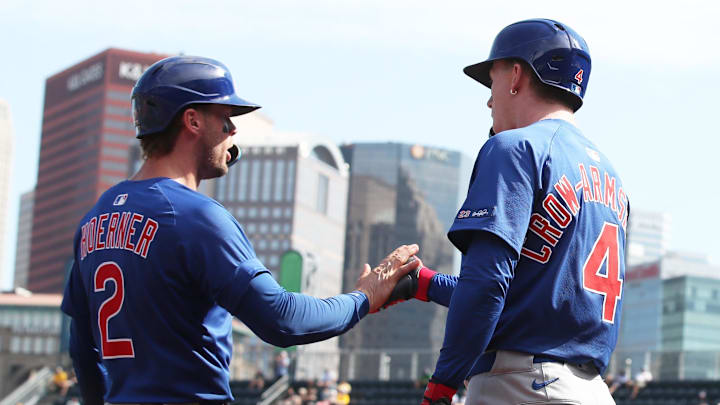
It's officially payday for PCA and Nico Hoerner. The Chicago Cubs made fans' hopes and dreams a reality on Monday night after news broke that they'd extended superstar center fielder Pete Crow-Armstrong to a long-term deal. Then, they did it again after Opening Day for their second baseman. For so many reasons, these are landmark moves for Jed Hoyer, locking up two clear faces of the franchise for the long haul and learning from past mistakes with the World Series core.
Both six-year deals, starting in 2027, also rank quite high among all the contracts the Cubs have signed in their history. Though not quite comparable to some of their free agency deals, like the recent five-year haul offered to Alex Bregman, PCA and Hoerner's new agreements are the largest extensions they've ever put pen to paper on, followed by Carlos Zambrano's five-year, $91.5 million re-up with the team in 2007. For further context, Anthony Rizzo's notoriously team-friendly seven-year extension in 2013 was worth just $41 million, with two options and escalators that brought it to $73 million.
Without question, Chicago hasn't done the best at keeping their homegrown stars under contract long-term of late, so making two massive new deals within the span of a week is a breath of fresh air. Let's look at how they rank compared to some of the other biggest deals in Cubs history until now.
9. Seiya Suzuki: 5 years, $99.6 million*
Just behind Crow-Armstrong on the list is his "step-brother," Seiya Suzuki, who came to the Cubs ahead of the 2022 season. He was one of the most coveted Japanese hitters to transition to the U.S. since Shohei Ohtani signed with the Angels back in 2017, and the contract reflected that. The actual terms of the deal were five years, $85 milllion, but the posting fee for the Hiroshima Toyo Carp pumped up the cost a bit more. Still, it was more than worth it to bet on a five-time NPB All-Star and two-time Central League batting champion.
Suzuki has been streaky in his Cubs career, and the glove hasn't lived up to his reputation in Japan, but he's still put up some of the best overall offensive numbers of any player on the North Side in recent memory. Through his first four seasons, he has a .266/.346/.472 slash line with a 127 wRC+. He's likely to hit his 100th major league home run this year, too, given that he's already racked up 87 long balls to date. Unfortunately, a knee injury suffered during the World Baseball Classic will start his season on the IL, but he's still expected to be a big part of the team in 2026, especially since he'll be shifting back to right field.
8. Pete Crow-Armstrong: 6 years, $115 million
The first man of the hour lands eighth all-time among Cubs contracts, though that doesn't quite do his deal justice. Crow-Armstrong, compared to everyone ahead of him, was far from being a free agent. As Jeff Passan pointed out, his deal is by far a record for a player with five years of club control left without a club option attached. Incentives can also raise the price even higher to $133 million. That is a significant guarantee to any player that early into their career, let alone one like PCA, who still has something to prove. To be clear, though, that's worth doing ten times out of ten given who he is and what he's shown at just 24 years old.
Crow-Armstrong's all-world, Gold Glove-winning defense alone gives him a very high floor as a player. The only center fielder capable of rivaling him at the position right now would be Red Sox youngster Cedanne Rafaela. His bat will be the difference maker, though. During the first half of last season, he proved he could carry the lineup on his own with a 131 wRC+, something most players aren't capable of. Even with his struggles down the stretch, he still became only the second player in team history with a 30-30 season while being one of Chicago's most beloved athletes. There's room for him to grow if he can pick his swings better, and the Cubs are betting on it given his sky-high ceiling.
7. Yu Darvish: 6 years, $126 million
Yu Darvish's contract was a bit of a winding journey for Cubs fans. The elite Japanese veteran was an exciting addition in February, coming off a stellar four and a half seasons in Texas before a midseason trade to the Dodgers in 2017. His tenure couldn't have started worse, though, with a 2018 that was essentially lost due to both elbow and triceps injuries. 2019 was a nice return to form, if not quite as good as fans had hoped, but 2020 completely turned his fortunes around, nearly earning him a Cy Young in the shortened campaign with a 2.02 ERA and 2.23 FIP.
By the time the Cubs traded him to the San Diego Padres amid cries of "biblical losses" and the impending cliff of the 2016 core, Darvish had become a fan favorite. As such, his tenure feels frustratingly incomplete for reasons outside of his control. Nonetheless, it was worthwhile to have such a bright personality and respected veteran on the staff, and it would pay dividends later on when he would personally recommend his old team to Suzuki when he was considering which team to sign with, helping the Cubs garner a greater footprint in Japan.
6. Alfonso Soriano: 8 years, $136 million
Crow-Armstrong actually beat his fellow outfielder Alfonso Soriano in AAV, but Fonzie ultimately won out in terms of overall dollars. His deal helped the Cubs enter the modern-day era of free agency, as they paid for his services following a mostly excellent span of six seasons playing for the Yankees, Rangers, and Nationals, including a third-place MVP finish in New York. Despite hitting for a wRC+ of 100 or greater every season he was in Chicago and delivering one truly great season in 2007 with a .299/.337/.560 slash line, 122 wRC+, and 33 home runs, his overall tenure is still remembered as a disappointment due to how the contract aged. It didn't help that his presence didn't lead to much playoff success and ended with a trade back to the Bronx.
5. Nico Hoerner: 6 years, $141 million
Show me someone who predicted Hoerner would become one of the highest-paid Cubs players ever, and I will show you a liar. Here we are, nearly seven years later, though, and that's the reality. Actually, that's not the full picture — he earned the fourth-largest guarantee for any second baseman ever, behind Jose Altuve (seven years, $163.5 million), Marcus Semien (seven years, $175 million), and Robinson Cano (ten years, $240 million). While he was a highly-touted player rising through Chicago's minor league system, Hoerner always seemed like, at best, a great complementary piece with a high floor thanks to his glove, but a ceiling limited by his lack of power. Yet, ever since his debut in September 2019, when he went three for five with four RBIs, he has been defying expectations.
Hoerner survived the detonation of the World Series core, multiple rounds of trade rumors, a second rebuild in ten years, and more to get to this point. And he's earned every cent from that massive, slightly deferred deal along the way. From his first 4+ fWAR season in 2022 through now, he's been tied for the most valuable second baseman in baseball by fWAR with Semien at 17.3. He's remarkably consistent, always hitting for around .275 to .300 with a slightly above average bat while picking up two Gold Gloves as one of the position's best defenders and stealing 20+ bags a year. The x-factor, however, is that he's become this team's heart and soul, something the Cubs couldn't afford to lose.
4. Jon Lester: 6 years, $155 million
If Soriano aged poorly in the eyes of Cubs fans, Jon Lester aged like fine wine. Lester is still considered by many to be the greatest free agent signing in the history of the team and is also their biggest commitment to a starting pitcher ever. His addition represented the beginning of a special moment, becoming the proven veteran that an up-and-coming young roster needed in 2015 to make a push for the playoffs and ultimately get to the NLCS.
The big lefty wasn't just effective, but remarkably durable, appearing in no less than 154 innings a season throughout his tenure (not counting the shortened 2020 campaign) while recording a 3.64 ERA. His greatest achievement, of course, was in 2016, when, along with Jake Arrieta and Kyle Hendricks, he was part of a three-headed monster of a rotation that would carry the team to the World Series. A 2.44 ERA and 2.92 FIP in 202 2/3 innings was enough to garner him a second-place Cy Young, though his real accomplishment was being just as lights out in the postseason, earning him NLCS MVP honors and a third ring as part of the world champions. By every measure, he was the perfect signing at the perfect time, and he'll never have to buy a beer again in Chicago because of it.
3. Alex Bregman: 5 years, $175 million
At this point, we still don't know how Bregman will age yet, but the signing has already meant a lot for the Cubs. In landing the third baseman, Hoyer righted a wrong from last offseason and got aggressive to land a player the front office loved. He's been a complete player throughout his career, getting tons of postseason experience with the Houston Astros and racking up his fair share of MVP votes in the process. His best days are behind him, though his injury-limited stint in Boston proved he could still hit, slashing .273/.360/.462 with a 125 wRC+ in 114 games. Not to mention, there's been no shortage of reporting about his excellent leadership skills.
More than anything, though, Bregman has a chance to be the Lester for this current core. In inking this contract, with all of its deferrals and the highest AAV in Cubs history, Tom Ricketts finally showed this is a big market team again, ready to make a splash, even if it means going outside their comfort zone. Time will tell whether this is a turning point or a contract everyone will come to regret. Right now, though, hopes are high for what he can do in the middle of this lineup with PCA.
2. Dansby Swanson: 7 years, $177 million
The first of two all-world defensive former Atlanta Braves on this list, Dansby Swanson has been a decent, reliable fixture at shortstop since signing ahead of the 2023 season. He earned a Gold Glove in his first season as a Cub and has helped make their defense up the middle an iron curtain with Hoerner. 2025 was a chance for him to flash the leather under the bright lights of the playoffs last year, too, arguably being the reason Chicago escaped the Wild Card series against the Padres at all. Swanson also consistently hits around .240 with a 100 wRC+, not quite what fans hoped, but adequate with how much value he offers on defense.
Hoyer got exactly what he paid for with the shortstop, both in the field and in the clubhouse. Swanson has been a big part of the renewed culture of winning around the Cubs after the dismantling of the World Series core. Though Crow-Armstrong, Bregman, and Suzuki are all more important offensive pieces than him, his leadership and defense will be just as vital to the team's push to return to October glory.
1. Jason Heyward: 8 years, $184 million
Ten years later, nobody has surpassed the contract the Cubs gave Jason Heyward. The now-infamous deal was meant to be a superstar addition to help a blossoming young team get over the hump in 2016. From that perspective, it was a complete success, even though Heyward only hit .230/.306/.325 with a 72 wRC+. He gave the now-famous rain delay speech that helped rally the team to take Game 7 in extra innings and break the 108-year curse looming over the franchise.
From there, though, it was mostly downhill. Aside from the shortened 2020 season, Heyward never really hit in a Cubs uniform the way he had during his early years with the Braves and later Cardinals. The only things he consistently provided were excellent right field defense, which earned him two Gold Gloves in Chicago, veteran leadership, and respectable baserunning. His contract, however, was treated more as an anchor on their ability to spend further, which still hasn't been fully paid off. Even if he wasn't the player anyone expected, nowadays, it's hard not to appreciate him both as a key piece of one of the greatest eras in Cubs history and a force for good within the community.
 Add us as a preferred source on Google