%20%20--%3E%0A%3Csvg%20version%3D%221.1%22%20xmlns%3D%22http%3A%2F%2Fwww.w3.org%2F2000%2Fsvg%22%20xmlns%3Axlink%3D%22http%3A%2F%2Fwww.w3.org%2F1999%2Fxlink%22%20x%3D%220px%22%20y%3D%220px%22%0A%09%20viewBox%3D%220%200%201092.7%20200%22%20style%3D%22enable-background%3Anew%200%200%201092.7%20200%3B%22%20xml%3Aspace%3D%22preserve%22%3E%0A%3Cstyle%20type%3D%22text%2Fcss%22%3E%0A%09.st0%7Bfill%3A%23231F20%3B%7D%0A%09.st1%7Bfill%3A%23293576%3B%7D%0A%09.st2%7Bfill%3A%23C82C2D%3B%7D%0A%09.st3%7Bfill%3A%23FFFFFF%3B%7D%0A%3C%2Fstyle%3E%0A%3Cg%20id%3D%22Template%22%3E%0A%3C%2Fg%3E%0A%3Cg%20id%3D%22Layer_2%22%3E%0A%09%3Cpolygon%20class%3D%22st3%22%20points%3D%2256.8%2C78.5%2073.1%2C78.5%2085.5%2C78.5%2085.5%2C36.3%2085.5%2C0%2068.8%2C0%2064.9%2C6.2%2063.3%2C8.7%2052%2C0%2025.5%2C0%2021.8%2C3.8%20%0A%09%092%2C23.8%202%2C176.2%2025%2C200%2061.5%2C200%2085.5%2C176.2%2085.5%2C121.5%2056.8%2C121.5%2056.8%2C176.2%2039.5%2C176.2%2039.5%2C32.4%2039.5%2C23.8%2056.8%2C23.8%2056.8%2C57.2%20%0A%09%09%09%22%2F%3E%0A%09%3Cpolygon%20class%3D%22st3%22%20points%3D%22143.9%2C104.2%20143.9%2C48.1%20143.9%2C24.2%20152.1%2C24.2%20153.2%2C24.2%20153.2%2C0%20152.1%2C0%20106.8%2C0%2093.9%2C0%2093.9%2C24.2%20%0A%09%09106.7%2C24.2%20106.7%2C63.4%20106.7%2C116.9%20106.7%2C175.8%20130.4%2C200%20169.2%2C200%20183%2C184.8%20191.2%2C175.8%20191.2%2C146.2%20191.2%2C96.1%20191.2%2C24.2%20%0A%09%09201.4%2C24.2%20201.4%2C0%20163.7%2C0%20158.7%2C0%20158.7%2C24.2%20163.7%2C24.2%20169.2%2C24.2%20169.2%2C75.2%20169.2%2C127.8%20169.2%2C174.1%20169.2%2C175.8%20%0A%09%09143.9%2C175.8%20143.9%2C152.9%20%09%22%2F%3E%0A%09%3Cpath%20class%3D%22st3%22%20d%3D%22M220.3%2C168v8.3h-10.5V200h62.1h12.7l28.5-23.8v-66l-5.2-5.1l-7.8-7.6l7.8-7.8l2.5-2.5V60V25.7%0A%09%09c0%2C0.7-8.6-7.9-25.7-25.7h-43H230h-20.2v23.8h10.5v96.7V168z%20M257.5%2C23.8h22.2v60.5h-22.2V23.8z%20M257.5%2C110.3h22.2v50.2v15.8h-22.2%0A%09%09v-29.4V110.3z%22%2F%3E%0A%09%3Cpath%20class%3D%22st3%22%20d%3D%22M331.9%2C176.2h-10.5v6V200h42.8h21.4h10.5l1-0.9l27.4-22.9v-56.9v-9.1l-13-12.8l10.3-10.2V25.7%0A%09%09c0%2C0.7-8.6-7.9-25.7-25.7h-74.8v23.8h10.5V45V176.2z%20M391.4%2C176.2h-5.8h-16.5v-66h22.2v17.9V176.2z%20M369.2%2C23.8h22.2v60.5H376h-6.9%0A%09%09v-5.6V23.8z%22%2F%3E%0A%09%3Cpolygon%20class%3D%22st3%22%20points%3D%22443.3%2C175.8%20433%2C175.8%20433%2C200%20463.5%2C200%20475%2C200%20489.5%2C200%20489.5%2C175.8%20480%2C175.8%20480%2C147.6%20%0A%09%09480%2C25.5%20489.5%2C25.5%20489.5%2C0%20433%2C0%20433%2C25.5%20443.3%2C25.5%20443.3%2C130.4%20%09%22%2F%3E%0A%09%3Cpolygon%20class%3D%22st3%22%20points%3D%22505.6%2C175.8%20497.9%2C175.8%20497.9%2C200%20541.3%2C200%20552.9%2C200%20583.6%2C200%20595.1%2C187.7%20595.1%2C153.9%20%0A%09%09595.1%2C140.7%20566.9%2C140.7%20566.9%2C159.5%20566.9%2C175.8%20542.6%2C175.8%20542.6%2C160.5%20542.6%2C115.8%20556.6%2C115.8%20556.6%2C133%20580.1%2C133%20%0A%09%09580.1%2C67.7%20556.6%2C67.7%20556.6%2C85%20542.6%2C85%20542.6%2C25.5%20566.9%2C25.5%20566.9%2C60.8%20595.1%2C60.8%20595.1%2C0%20497.9%2C0%20497.9%2C25.5%20505.6%2C25.5%20%0A%09%09505.6%2C155.6%20%09%22%2F%3E%0A%09%3Cpolygon%20class%3D%22st3%22%20points%3D%22682.8%2C73.5%20682.8%2C0%20669.5%2C0%20659%2C5.5%20652.7%2C0%20627.3%2C0%20603.5%2C24.2%20603.5%2C91.7%20628.1%2C116.2%20654.3%2C116.2%20%0A%09%09654.3%2C128.5%20654.3%2C176.2%20630.8%2C176.2%20630.8%2C140.6%20630.8%2C128.7%20604.5%2C128.7%20604.5%2C151%20604.5%2C200%20619.1%2C200%20625%2C200%20629.8%2C195.2%20%0A%09%09630.7%2C195.9%20637%2C200%20666.3%2C200%20687.5%2C176.2%20687.5%2C107.3%20687.5%2C106.8%20667%2C83%20635.5%2C83%20635.5%2C24.2%20656.8%2C24.2%20656.8%2C73.5%20%09%22%2F%3E%0A%09%3Cpolygon%20class%3D%22st2%22%20points%3D%22774%2C78.5%20774.8%2C78.5%20786.4%2C78.5%20802.8%2C78.5%20802.8%2C0.7%20802.8%2C0%20786%2C0%20780.5%2C8.7%20769.3%2C0%20742.8%2C0%20%0A%09%09719.3%2C23.8%20719.3%2C83.3%20719.3%2C176.2%20739%2C196.6%20742.3%2C200%20778.8%2C200%20802.8%2C176.2%20802.8%2C167%20802.8%2C121.5%20786.4%2C121.5%20774.8%2C121.5%20%0A%09%09774%2C121.5%20774%2C176.2%20756.8%2C176.2%20756.8%2C50.3%20756.8%2C23.8%20774%2C23.8%20774%2C33.1%20%09%22%2F%3E%0A%09%3Cpath%20class%3D%22st2%22%20d%3D%22M821.4%2C176.2h-10.2V200h11.2h45.8v-23.8h-6.5h-3v-65h5.5h11.7v7.6v47.7v9.7l14.7%2C23.3l0.3%2C0.4h25.2v-19v-4.8%0A%09%09h-5.5V140v-25.6l-13.3-13.3l-0.2-0.2l2.2-1.5l11.3-7.8v-2.5V24.2L882.4%2C0h-18.2h-11.6h-41.5v24.2h10.2v132.1V176.2z%20M858.7%2C24.2%0A%09%09h5.5h12.5V87h-12.5h-5.5V24.2z%22%2F%3E%0A%09%3Cpolygon%20class%3D%22st2%22%20points%3D%22934.8%2C166.2%20934.8%2C175.8%20924.5%2C175.8%20924.5%2C200%20981%2C200%20981%2C175.8%20971.5%2C175.8%20971.5%2C133.1%20%0A%09%09971.5%2C81.9%20971.5%2C25.5%20981%2C25.5%20981%2C9.1%20981%2C0%20942%2C0%20930.5%2C0%20924.5%2C0%20924.5%2C25.5%20930.5%2C25.5%20934.8%2C25.5%20934.8%2C119%20%09%22%2F%3E%0A%09%3Cpath%20class%3D%22st2%22%20d%3D%22M1089.9%2C87.2V25.7c0%2C0.6-6.4-5.8-19.3-19c-2-2.1-4.2-4.3-6.5-6.7h-31h-43.7v23.8h10.5v24.2v55.5v72.8h-10.5%0A%09%09V200h74.8l28.5-23.8v-66l-13-12.8L1089.9%2C87.2z%20M1059.4%2C176.2h-22.2v-66h22.2V176.2z%20M1059.4%2C84.2h-22.2V57.5V23.8h22.2V25V84.2z%22%0A%09%09%2F%3E%0A%3C%2Fg%3E%0A%3C%2Fsvg%3E%0A)

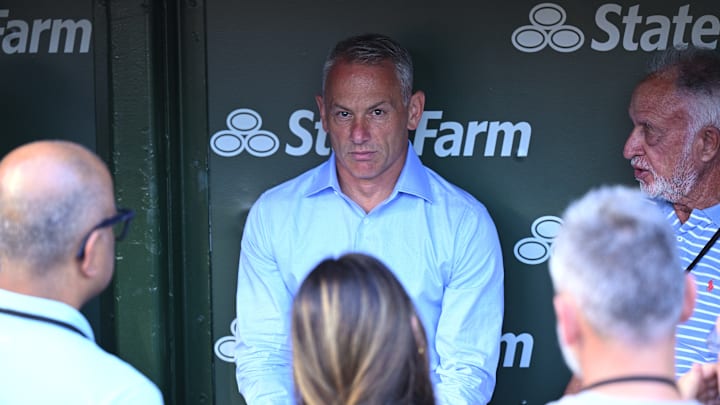
Jed Hoyer’s tenure as Chicago Cubs president of baseball operations has been marked by inconsistency, missed opportunities and a series of moves that have left fans frustrated.
From trades that gutted talent with little return to free-agent signings that flopped, Hoyer’s track record is littered with missteps that have stalled the Cubs’ progress. Here are the five worst moves of the Jed Hoyer era — the ones that continue to haunt the franchise.
5 brutal decisions Cubs fans won't ever forgive Jed Hoyer for
The Cody Bellinger Trade
Last offseason, the Cubs decided to trade Cody Bellinger to the New York Yankees. Bellinger arguably did not warrant the $27 million that the Cubs gave him the previous winter, and the team had ample replacements in Michael Busch at first base and Pete Crow-Armstrong in center field. But this trade is a failure because of what it represents.
This era of Cubs baseball is characterized by cautious financial maneuvering, and the Bellinger trade is a prime example. The team shed tens of millions of dollars in payroll, which fans hoped would be reinvested in the form of a top starting pitcher. But that did not happen, and the team decided to operate $30 million below the first competitive balance tax threshold, which has acted as a de facto salary cap for the team in recent years.
Fans were already frustrated with the penny pinching, with other competitive teams like the San Diego Padres and Philadelphia Phillies no strangers to locking up top players on long-term deals. Instead, the Cubs are banking on their unproven talent developing into superstars and jettisoning players like Bellinger to save money.
Hiring Carter Hawkins
Carter Hawkins was brought in to serve as Hoyer's general manager when he took over the team in 2020. It was pitched as a move to overhaul the team's pitching infrastructure since Hawkins previously worked in the Cleveland Guardians organization, which is known for its pitching development.
Although the Cubs are churning out pitchers at a better pace, there has been a clear shift toward prioritizing analytics to the point where it feels pretty robotic. The best example of this came after the 2025 trade deadline, when Hawkins told the media that he and Hoyer are focused on making the team good, but also focused on the 2032 Cubs. I understand the sentiment, but the comment was made at the wrong time and it came off as completely tone deaf with fans frustrated that their team is unwilling to make aggressive moves to compete.
The Kris Bryant Trade
One of the main characteristics of Hoyer's tenure as President was the 2021 trade deadline, where he sent the core of players who won the 2016 Worlds Series packing. In hindsight, Hoyer was probably correct with the overall approach since Kris Bryant, Anthony Rizzo, and Javier Baez all saw steep declines in their on-field production after they left the Cubs.
However, that doesn't absolve the fact that the return for the Bryant trade has aged very poorly. The Cubs sent the 2016 NL MVP to the San Francisco Giants in exchange for outfield prospect Alexander Canario and right-handed pitcher Caleb Kilian. While the returns for the rest of the trade yielded high-upside prospects like Pete Crow-Armstrong, Daniel Palencia, Kevin Alcantara, and Owen Caissie, Canario and Kilian have failed to produce at the big-league level.
Both men were designated for assignment by the team before the 2025 season. Although Kilian came back on a minor league deal, he has been rehabbing an injury all year and owns a career 9.22 ERA in 27.1 major league innings.
The 2025 Trade Deadline Approach
At the 2025 trade deadline, virtually everyone in the Chicago Cubs' orbit expected them to acquire a starting pitcher. After failing to sign one in the offseason after the Bellinger salary dump, we were told that the team would have more financial flexibility to add at the trade deadline. Unfortunately, that wasn't the case.
Hoyer and company failed to get a quality starter who could start in the first three games of a playoff series. They decided that the price was too rich for their blood, and went with smaller bullpen upgrades and upgrading their bench with Willi Castro. Not horrible moves on their own, but a big trade needed to be made, and it didn't happen.
This could have very well stymied the momentum of what looked like a guaranteed playoff team in the first half. But Hoyer thought it was smarter to clutch his prospects instead of showing his guys that he believes in their chances this year. This failure also severely damaged Hoyer's reputation with Chicago's fanbase, who are sick of seeing the team overcharge for concessions and ticket prices while cutting corners with the product on the field.
Non-tendering Kyle Schwarber
This is by far the most glaring mistake of Hoyer's tenure. At the time, the front office decided to non-tender Schwarber rather than pay his rising arbitration salary, betting that his streaky power wasn’t worth the cost. The move was framed as a financial decision during the pandemic, but it backfired in a massive way.
Since leaving Chicago, Schwarber has become one of the most feared sluggers in baseball. He’s consistently posted 30–40+ home run seasons, delivered in October with clutch homers, and evolved into a lineup-altering presence for contenders like the Red Sox and Phillies. Meanwhile, the Cubs have struggled to find a left-handed power bat with his kind of production, often cycling through short-term stopgaps while watching Schwarber thrive elsewhere.
What makes the decision worse is that Schwarber embodied the Cubs’ identity: a homegrown World Series hero, a fan favorite, and a player who embraced big moments. The front office gave up on him too soon, undervaluing the modern game’s emphasis on power and on-base ability. Hoyer has the opportunity to rectify this mistake by signing Schwarber when he hits free agency this winter. But it's hard to imagine Schwarber wanting to return to play for the front office that cast him aside.
 Add us as a preferred source on Google