%20%20--%3E%0A%3Csvg%20version%3D%221.1%22%20xmlns%3D%22http%3A%2F%2Fwww.w3.org%2F2000%2Fsvg%22%20xmlns%3Axlink%3D%22http%3A%2F%2Fwww.w3.org%2F1999%2Fxlink%22%20x%3D%220px%22%20y%3D%220px%22%0A%09%20viewBox%3D%220%200%201092.7%20200%22%20style%3D%22enable-background%3Anew%200%200%201092.7%20200%3B%22%20xml%3Aspace%3D%22preserve%22%3E%0A%3Cstyle%20type%3D%22text%2Fcss%22%3E%0A%09.st0%7Bfill%3A%23231F20%3B%7D%0A%09.st1%7Bfill%3A%23293576%3B%7D%0A%09.st2%7Bfill%3A%23C82C2D%3B%7D%0A%09.st3%7Bfill%3A%23FFFFFF%3B%7D%0A%3C%2Fstyle%3E%0A%3Cg%20id%3D%22Template%22%3E%0A%3C%2Fg%3E%0A%3Cg%20id%3D%22Layer_2%22%3E%0A%09%3Cpolygon%20class%3D%22st3%22%20points%3D%2256.8%2C78.5%2073.1%2C78.5%2085.5%2C78.5%2085.5%2C36.3%2085.5%2C0%2068.8%2C0%2064.9%2C6.2%2063.3%2C8.7%2052%2C0%2025.5%2C0%2021.8%2C3.8%20%0A%09%092%2C23.8%202%2C176.2%2025%2C200%2061.5%2C200%2085.5%2C176.2%2085.5%2C121.5%2056.8%2C121.5%2056.8%2C176.2%2039.5%2C176.2%2039.5%2C32.4%2039.5%2C23.8%2056.8%2C23.8%2056.8%2C57.2%20%0A%09%09%09%22%2F%3E%0A%09%3Cpolygon%20class%3D%22st3%22%20points%3D%22143.9%2C104.2%20143.9%2C48.1%20143.9%2C24.2%20152.1%2C24.2%20153.2%2C24.2%20153.2%2C0%20152.1%2C0%20106.8%2C0%2093.9%2C0%2093.9%2C24.2%20%0A%09%09106.7%2C24.2%20106.7%2C63.4%20106.7%2C116.9%20106.7%2C175.8%20130.4%2C200%20169.2%2C200%20183%2C184.8%20191.2%2C175.8%20191.2%2C146.2%20191.2%2C96.1%20191.2%2C24.2%20%0A%09%09201.4%2C24.2%20201.4%2C0%20163.7%2C0%20158.7%2C0%20158.7%2C24.2%20163.7%2C24.2%20169.2%2C24.2%20169.2%2C75.2%20169.2%2C127.8%20169.2%2C174.1%20169.2%2C175.8%20%0A%09%09143.9%2C175.8%20143.9%2C152.9%20%09%22%2F%3E%0A%09%3Cpath%20class%3D%22st3%22%20d%3D%22M220.3%2C168v8.3h-10.5V200h62.1h12.7l28.5-23.8v-66l-5.2-5.1l-7.8-7.6l7.8-7.8l2.5-2.5V60V25.7%0A%09%09c0%2C0.7-8.6-7.9-25.7-25.7h-43H230h-20.2v23.8h10.5v96.7V168z%20M257.5%2C23.8h22.2v60.5h-22.2V23.8z%20M257.5%2C110.3h22.2v50.2v15.8h-22.2%0A%09%09v-29.4V110.3z%22%2F%3E%0A%09%3Cpath%20class%3D%22st3%22%20d%3D%22M331.9%2C176.2h-10.5v6V200h42.8h21.4h10.5l1-0.9l27.4-22.9v-56.9v-9.1l-13-12.8l10.3-10.2V25.7%0A%09%09c0%2C0.7-8.6-7.9-25.7-25.7h-74.8v23.8h10.5V45V176.2z%20M391.4%2C176.2h-5.8h-16.5v-66h22.2v17.9V176.2z%20M369.2%2C23.8h22.2v60.5H376h-6.9%0A%09%09v-5.6V23.8z%22%2F%3E%0A%09%3Cpolygon%20class%3D%22st3%22%20points%3D%22443.3%2C175.8%20433%2C175.8%20433%2C200%20463.5%2C200%20475%2C200%20489.5%2C200%20489.5%2C175.8%20480%2C175.8%20480%2C147.6%20%0A%09%09480%2C25.5%20489.5%2C25.5%20489.5%2C0%20433%2C0%20433%2C25.5%20443.3%2C25.5%20443.3%2C130.4%20%09%22%2F%3E%0A%09%3Cpolygon%20class%3D%22st3%22%20points%3D%22505.6%2C175.8%20497.9%2C175.8%20497.9%2C200%20541.3%2C200%20552.9%2C200%20583.6%2C200%20595.1%2C187.7%20595.1%2C153.9%20%0A%09%09595.1%2C140.7%20566.9%2C140.7%20566.9%2C159.5%20566.9%2C175.8%20542.6%2C175.8%20542.6%2C160.5%20542.6%2C115.8%20556.6%2C115.8%20556.6%2C133%20580.1%2C133%20%0A%09%09580.1%2C67.7%20556.6%2C67.7%20556.6%2C85%20542.6%2C85%20542.6%2C25.5%20566.9%2C25.5%20566.9%2C60.8%20595.1%2C60.8%20595.1%2C0%20497.9%2C0%20497.9%2C25.5%20505.6%2C25.5%20%0A%09%09505.6%2C155.6%20%09%22%2F%3E%0A%09%3Cpolygon%20class%3D%22st3%22%20points%3D%22682.8%2C73.5%20682.8%2C0%20669.5%2C0%20659%2C5.5%20652.7%2C0%20627.3%2C0%20603.5%2C24.2%20603.5%2C91.7%20628.1%2C116.2%20654.3%2C116.2%20%0A%09%09654.3%2C128.5%20654.3%2C176.2%20630.8%2C176.2%20630.8%2C140.6%20630.8%2C128.7%20604.5%2C128.7%20604.5%2C151%20604.5%2C200%20619.1%2C200%20625%2C200%20629.8%2C195.2%20%0A%09%09630.7%2C195.9%20637%2C200%20666.3%2C200%20687.5%2C176.2%20687.5%2C107.3%20687.5%2C106.8%20667%2C83%20635.5%2C83%20635.5%2C24.2%20656.8%2C24.2%20656.8%2C73.5%20%09%22%2F%3E%0A%09%3Cpolygon%20class%3D%22st2%22%20points%3D%22774%2C78.5%20774.8%2C78.5%20786.4%2C78.5%20802.8%2C78.5%20802.8%2C0.7%20802.8%2C0%20786%2C0%20780.5%2C8.7%20769.3%2C0%20742.8%2C0%20%0A%09%09719.3%2C23.8%20719.3%2C83.3%20719.3%2C176.2%20739%2C196.6%20742.3%2C200%20778.8%2C200%20802.8%2C176.2%20802.8%2C167%20802.8%2C121.5%20786.4%2C121.5%20774.8%2C121.5%20%0A%09%09774%2C121.5%20774%2C176.2%20756.8%2C176.2%20756.8%2C50.3%20756.8%2C23.8%20774%2C23.8%20774%2C33.1%20%09%22%2F%3E%0A%09%3Cpath%20class%3D%22st2%22%20d%3D%22M821.4%2C176.2h-10.2V200h11.2h45.8v-23.8h-6.5h-3v-65h5.5h11.7v7.6v47.7v9.7l14.7%2C23.3l0.3%2C0.4h25.2v-19v-4.8%0A%09%09h-5.5V140v-25.6l-13.3-13.3l-0.2-0.2l2.2-1.5l11.3-7.8v-2.5V24.2L882.4%2C0h-18.2h-11.6h-41.5v24.2h10.2v132.1V176.2z%20M858.7%2C24.2%0A%09%09h5.5h12.5V87h-12.5h-5.5V24.2z%22%2F%3E%0A%09%3Cpolygon%20class%3D%22st2%22%20points%3D%22934.8%2C166.2%20934.8%2C175.8%20924.5%2C175.8%20924.5%2C200%20981%2C200%20981%2C175.8%20971.5%2C175.8%20971.5%2C133.1%20%0A%09%09971.5%2C81.9%20971.5%2C25.5%20981%2C25.5%20981%2C9.1%20981%2C0%20942%2C0%20930.5%2C0%20924.5%2C0%20924.5%2C25.5%20930.5%2C25.5%20934.8%2C25.5%20934.8%2C119%20%09%22%2F%3E%0A%09%3Cpath%20class%3D%22st2%22%20d%3D%22M1089.9%2C87.2V25.7c0%2C0.6-6.4-5.8-19.3-19c-2-2.1-4.2-4.3-6.5-6.7h-31h-43.7v23.8h10.5v24.2v55.5v72.8h-10.5%0A%09%09V200h74.8l28.5-23.8v-66l-13-12.8L1089.9%2C87.2z%20M1059.4%2C176.2h-22.2v-66h22.2V176.2z%20M1059.4%2C84.2h-22.2V57.5V23.8h22.2V25V84.2z%22%0A%09%09%2F%3E%0A%3C%2Fg%3E%0A%3C%2Fsvg%3E%0A)

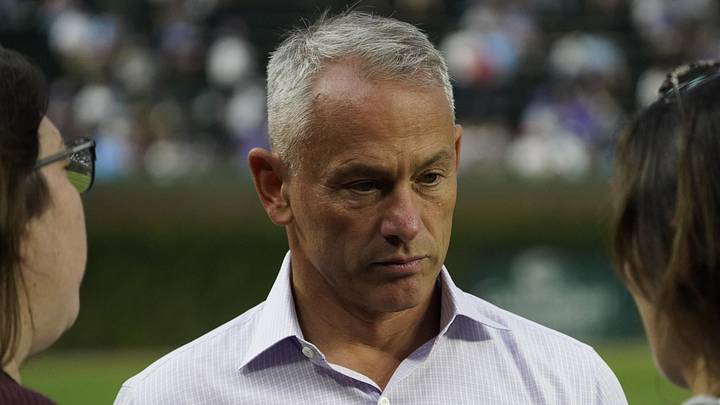
Expectations have completely flipped on this Chicago Cubs team after a brutal month+ of baseball. This past offseason was cause for excitement for fans; after a 92-win 2025 campaign, Jed Hoyer finally reeled in a big fish in Alex Bregman, traded for a hard-throwing, high-strikeout starter in Edward Cabrera, and rebuilt the bullpen with more legitimate relievers than in past seasons. Not to mention the extensions to Nico Hoerner and Pete Crow-Armstrong to solidify their positions as faces of the franchise. Yet, since winning their last series on May 8, they've done nothing but collapse with a 7-20 record before their series against the Colorado Rockies this week.
Very little has gone right in this stretch. The many pitching injuries and setbacks, from Cade Horton's Tommy John surgery to Justin Steele's flexor strain and Matthew Boyd's multiple ailments, have caught up to the Cubs in the rotation. Over those 27 games, they own the second-worst ERA among all starting staffs at 6.58, ahead of only the Rockies. However, their offense, which was projected to be their strength, has let them down with a .211/.302/.330 slash line and an 83 wRC+.
There's a lot of blame to go around for this collapse of a team that was projected to win the division and be a real contender for a World Series. This group of players has a better track record and higher expectations around the industry that they have to live up to. Bregman, in particular, has accepted a lot of that criticism, given that he's being paid $175 million over five years to be a key piece of this lineup, but he's far from the only one underperforming.
Real questions also have to be asked about how Hoyer constructed this team. Manager Craig Counsell has started to earn the ire of fans, but at the end of the day, he's not the one out there swinging the bat, pitching, or deciding which players he can choose from to do those things. This is Hoyer's team, warts and all, and for as much optimism as there was to begin with, it deserves scrutiny. Let's look at three key decisions that contributed to the situation this team is currently in.
1. Not adding a surefire frontline starter in the offseason
I want to preface this by saying I liked the trade for Edward Cabrera in a vacuum. The young Marlins starter was coming off his best and most durable season in the majors, with a 3.53 ERA and 3.83 FIP in 137 2/3 innings. Moreover, he's locked up through the 2028 season, giving the Cubs someone young with actual swing-and-miss stuff to lean on for at least two more years after this. It hasn't gone to plan, though, as he currently sports a 4.99 ERA and a 4.89 FIP and has seen his strikeouts per nine drop from 9.81 just last year to 8.27.
The problem with trading for Cabrera as the big addition to the starting rotation is that it added another layer of risk to an already risky group. Heading into 2026, the Cubs didn't know what version of Shota Imanaga they were going to get after his struggles with the long ball last year. Boyd put together an All-Star campaign in 2025, but also mostly avoided the injury struggles that have plagued him throughout his career. Horton also had his issues with injuries in his minor league career and, for as great as he was, was only going to be in his second big league season.
Combined with Cabrera's sordid history of ailments, that created a rotation with a high ceiling if everyone pitched to their best, but a potentially low floor. Sure enough, the floor has been bottoming out, despite getting a pleasant surprise in the form of Ben Brown. This is a group that really needed a Dylan Cease, someone reliable who has built a reputation on their availability. Yes, the Blue Jays paid through the nose to land him at seven years and $210 million, but that's the price to pay for a high-end guy who posts year after year. Even adding another starter like Zac Gallen on top of Cabrera would've given them some insurance, even if it made the staff a tad crowded.
2. Leaning on an aging, streaky core to supply the offense
While most fans, including myself, were happy that Hoyer landed Bregman in the offseason, there was always a slight concern about his age. The former Astro is in his age-32 season, which is usually about when players begin their decline. For some, it can happen quite sharply. Now, I personally believe that Bregman may have some good seasons left in him and that he can still heat up and put together a year that, at the end of all this, will still look solid on paper. However, that doesn't mean his ever-decreasing bat speed (69.7 mph), average exit velocity (88.3 mph), and barrel rate (5.2%) aren't troubling.
Not only that, but when thinking about Bregman's age, it's hard to ignore how old most of the Cubs' core is. PCA, Hoerner, Michael Busch, and Moises Ballesteros all make up a very solid youth group, but in key positions, just about everyone else is on the wrong side of 30. Not all of them are playing poorly, mind you — Ian Happ is quietly in the midst of a career year with a .232/.347/.485 slash line and 133 wRC+ — but it's hard not to worry a little, in the case of someone like Dansby Swanson, who's slashing just .180/.285/.322, if there is some natural decline behind these performances.
Moreover, and more importantly, this is a group known for its streakiness. Seiya Suzuki may be the most obvious example, given his ice-cold and white-hot stretches over the past few years, but the Cubs are built around guys who enjoy some high highs and devastating lows, whether because they start slow or fluctuate throughout a season. That leads to some moments where the offense looks unbeatable, as seen during their two ten-game winning streaks, when they had the best bats in all of baseball with a collective 139 wRC+, and some where it could best be described as a black hole.
3. Failing to land a proper middle-of-the-order bat
Points 2 and 3 kind of go hand-in-hand, but it is important to make the distinction. For as good as Bregman was in the years before landing with the Cubs, he hasn't been an obvious aircraft carrier of a bat in some time. His last seasons of true superstardom were in 2018 and 2019, when he slashed .286/.394/.532 and .296/.423/.592, respectively. That's not to excuse him for his lackluster performance — he should at least be a 115-130 wRC+ guy — but it is to illustrate that, under Hoyer, the Cubs haven't gone after that level of player.
There's an argument to be made right now that they have two young players in Crow-Armstrong and Busch who are at least bordering on superstardom with the bat. However, it still feels like a missed opportunity that the Cubs never capitalized on their chances in recent offseasons to add that kind of player when their payroll commitments were lower. Two key examples are the back-to-back loaded shortstop classes of 2022 and 2023, which ended with them signing Swanson, primarily for his defense and leadership. It's also glaring with a lean upcoming offseason in which there isn't expected to be an obvious Aaron Judge, Juan Soto, or even Kyle Schwarber-type addition to be made.
These Cubs have really felt that lack of a true, consistent veteran power bat. They rank in the middle of the pack in terms of home runs and slugging percentage, with 74 and .388, respectively. However, where someone like that could best help this team is arguably in high-leverage situations. It's no secret that the Cubs are among baseball's worst units with runners in scoring position at .226/.326/.354, but they are a top-five group in on-base percentage. They could've used Schwarber, for instance, who already has 23 home runs and is again one of baseball's premier sluggers with a .238/.359/.573 slash line, to deliver more big hits after the rest of the team set the table.
 Add us as a preferred source on Google