%20%20--%3E%0A%3Csvg%20version%3D%221.1%22%20xmlns%3D%22http%3A%2F%2Fwww.w3.org%2F2000%2Fsvg%22%20xmlns%3Axlink%3D%22http%3A%2F%2Fwww.w3.org%2F1999%2Fxlink%22%20x%3D%220px%22%20y%3D%220px%22%0A%09%20viewBox%3D%220%200%201092.7%20200%22%20style%3D%22enable-background%3Anew%200%200%201092.7%20200%3B%22%20xml%3Aspace%3D%22preserve%22%3E%0A%3Cstyle%20type%3D%22text%2Fcss%22%3E%0A%09.st0%7Bfill%3A%23231F20%3B%7D%0A%09.st1%7Bfill%3A%23293576%3B%7D%0A%09.st2%7Bfill%3A%23C82C2D%3B%7D%0A%09.st3%7Bfill%3A%23FFFFFF%3B%7D%0A%3C%2Fstyle%3E%0A%3Cg%20id%3D%22Template%22%3E%0A%3C%2Fg%3E%0A%3Cg%20id%3D%22Layer_2%22%3E%0A%09%3Cpolygon%20class%3D%22st3%22%20points%3D%2256.8%2C78.5%2073.1%2C78.5%2085.5%2C78.5%2085.5%2C36.3%2085.5%2C0%2068.8%2C0%2064.9%2C6.2%2063.3%2C8.7%2052%2C0%2025.5%2C0%2021.8%2C3.8%20%0A%09%092%2C23.8%202%2C176.2%2025%2C200%2061.5%2C200%2085.5%2C176.2%2085.5%2C121.5%2056.8%2C121.5%2056.8%2C176.2%2039.5%2C176.2%2039.5%2C32.4%2039.5%2C23.8%2056.8%2C23.8%2056.8%2C57.2%20%0A%09%09%09%22%2F%3E%0A%09%3Cpolygon%20class%3D%22st3%22%20points%3D%22143.9%2C104.2%20143.9%2C48.1%20143.9%2C24.2%20152.1%2C24.2%20153.2%2C24.2%20153.2%2C0%20152.1%2C0%20106.8%2C0%2093.9%2C0%2093.9%2C24.2%20%0A%09%09106.7%2C24.2%20106.7%2C63.4%20106.7%2C116.9%20106.7%2C175.8%20130.4%2C200%20169.2%2C200%20183%2C184.8%20191.2%2C175.8%20191.2%2C146.2%20191.2%2C96.1%20191.2%2C24.2%20%0A%09%09201.4%2C24.2%20201.4%2C0%20163.7%2C0%20158.7%2C0%20158.7%2C24.2%20163.7%2C24.2%20169.2%2C24.2%20169.2%2C75.2%20169.2%2C127.8%20169.2%2C174.1%20169.2%2C175.8%20%0A%09%09143.9%2C175.8%20143.9%2C152.9%20%09%22%2F%3E%0A%09%3Cpath%20class%3D%22st3%22%20d%3D%22M220.3%2C168v8.3h-10.5V200h62.1h12.7l28.5-23.8v-66l-5.2-5.1l-7.8-7.6l7.8-7.8l2.5-2.5V60V25.7%0A%09%09c0%2C0.7-8.6-7.9-25.7-25.7h-43H230h-20.2v23.8h10.5v96.7V168z%20M257.5%2C23.8h22.2v60.5h-22.2V23.8z%20M257.5%2C110.3h22.2v50.2v15.8h-22.2%0A%09%09v-29.4V110.3z%22%2F%3E%0A%09%3Cpath%20class%3D%22st3%22%20d%3D%22M331.9%2C176.2h-10.5v6V200h42.8h21.4h10.5l1-0.9l27.4-22.9v-56.9v-9.1l-13-12.8l10.3-10.2V25.7%0A%09%09c0%2C0.7-8.6-7.9-25.7-25.7h-74.8v23.8h10.5V45V176.2z%20M391.4%2C176.2h-5.8h-16.5v-66h22.2v17.9V176.2z%20M369.2%2C23.8h22.2v60.5H376h-6.9%0A%09%09v-5.6V23.8z%22%2F%3E%0A%09%3Cpolygon%20class%3D%22st3%22%20points%3D%22443.3%2C175.8%20433%2C175.8%20433%2C200%20463.5%2C200%20475%2C200%20489.5%2C200%20489.5%2C175.8%20480%2C175.8%20480%2C147.6%20%0A%09%09480%2C25.5%20489.5%2C25.5%20489.5%2C0%20433%2C0%20433%2C25.5%20443.3%2C25.5%20443.3%2C130.4%20%09%22%2F%3E%0A%09%3Cpolygon%20class%3D%22st3%22%20points%3D%22505.6%2C175.8%20497.9%2C175.8%20497.9%2C200%20541.3%2C200%20552.9%2C200%20583.6%2C200%20595.1%2C187.7%20595.1%2C153.9%20%0A%09%09595.1%2C140.7%20566.9%2C140.7%20566.9%2C159.5%20566.9%2C175.8%20542.6%2C175.8%20542.6%2C160.5%20542.6%2C115.8%20556.6%2C115.8%20556.6%2C133%20580.1%2C133%20%0A%09%09580.1%2C67.7%20556.6%2C67.7%20556.6%2C85%20542.6%2C85%20542.6%2C25.5%20566.9%2C25.5%20566.9%2C60.8%20595.1%2C60.8%20595.1%2C0%20497.9%2C0%20497.9%2C25.5%20505.6%2C25.5%20%0A%09%09505.6%2C155.6%20%09%22%2F%3E%0A%09%3Cpolygon%20class%3D%22st3%22%20points%3D%22682.8%2C73.5%20682.8%2C0%20669.5%2C0%20659%2C5.5%20652.7%2C0%20627.3%2C0%20603.5%2C24.2%20603.5%2C91.7%20628.1%2C116.2%20654.3%2C116.2%20%0A%09%09654.3%2C128.5%20654.3%2C176.2%20630.8%2C176.2%20630.8%2C140.6%20630.8%2C128.7%20604.5%2C128.7%20604.5%2C151%20604.5%2C200%20619.1%2C200%20625%2C200%20629.8%2C195.2%20%0A%09%09630.7%2C195.9%20637%2C200%20666.3%2C200%20687.5%2C176.2%20687.5%2C107.3%20687.5%2C106.8%20667%2C83%20635.5%2C83%20635.5%2C24.2%20656.8%2C24.2%20656.8%2C73.5%20%09%22%2F%3E%0A%09%3Cpolygon%20class%3D%22st2%22%20points%3D%22774%2C78.5%20774.8%2C78.5%20786.4%2C78.5%20802.8%2C78.5%20802.8%2C0.7%20802.8%2C0%20786%2C0%20780.5%2C8.7%20769.3%2C0%20742.8%2C0%20%0A%09%09719.3%2C23.8%20719.3%2C83.3%20719.3%2C176.2%20739%2C196.6%20742.3%2C200%20778.8%2C200%20802.8%2C176.2%20802.8%2C167%20802.8%2C121.5%20786.4%2C121.5%20774.8%2C121.5%20%0A%09%09774%2C121.5%20774%2C176.2%20756.8%2C176.2%20756.8%2C50.3%20756.8%2C23.8%20774%2C23.8%20774%2C33.1%20%09%22%2F%3E%0A%09%3Cpath%20class%3D%22st2%22%20d%3D%22M821.4%2C176.2h-10.2V200h11.2h45.8v-23.8h-6.5h-3v-65h5.5h11.7v7.6v47.7v9.7l14.7%2C23.3l0.3%2C0.4h25.2v-19v-4.8%0A%09%09h-5.5V140v-25.6l-13.3-13.3l-0.2-0.2l2.2-1.5l11.3-7.8v-2.5V24.2L882.4%2C0h-18.2h-11.6h-41.5v24.2h10.2v132.1V176.2z%20M858.7%2C24.2%0A%09%09h5.5h12.5V87h-12.5h-5.5V24.2z%22%2F%3E%0A%09%3Cpolygon%20class%3D%22st2%22%20points%3D%22934.8%2C166.2%20934.8%2C175.8%20924.5%2C175.8%20924.5%2C200%20981%2C200%20981%2C175.8%20971.5%2C175.8%20971.5%2C133.1%20%0A%09%09971.5%2C81.9%20971.5%2C25.5%20981%2C25.5%20981%2C9.1%20981%2C0%20942%2C0%20930.5%2C0%20924.5%2C0%20924.5%2C25.5%20930.5%2C25.5%20934.8%2C25.5%20934.8%2C119%20%09%22%2F%3E%0A%09%3Cpath%20class%3D%22st2%22%20d%3D%22M1089.9%2C87.2V25.7c0%2C0.6-6.4-5.8-19.3-19c-2-2.1-4.2-4.3-6.5-6.7h-31h-43.7v23.8h10.5v24.2v55.5v72.8h-10.5%0A%09%09V200h74.8l28.5-23.8v-66l-13-12.8L1089.9%2C87.2z%20M1059.4%2C176.2h-22.2v-66h22.2V176.2z%20M1059.4%2C84.2h-22.2V57.5V23.8h22.2V25V84.2z%22%0A%09%09%2F%3E%0A%3C%2Fg%3E%0A%3C%2Fsvg%3E%0A)

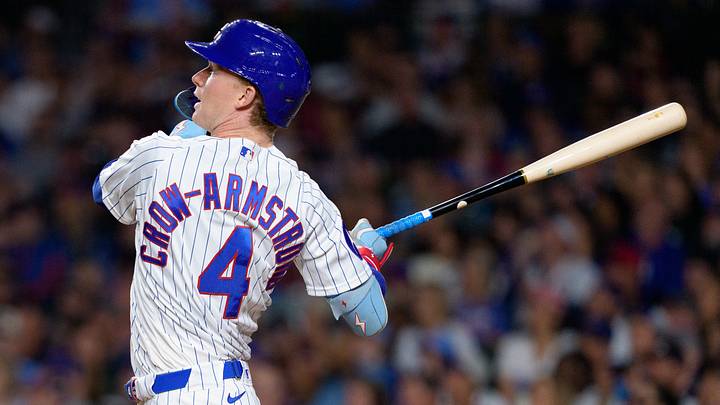
The 2026 Chicago Cubs delivered a season that was anything but smooth sailing. Almost from the get-go, injuries wreaked havoc on the pitching staff and that weakness followed the club right down to the end. The one constant, from start to finish, was superstar outfielder Pete Crow-Armstrong, the presumptive National League MVP Award winner.
PCA did it all, at times seeming to will the Cubs to victory, either through a clutch home run, heads-up baserunning play or unmatched defensive prowess. The end result was a season for the ages for the 24-year-old Gold Glover. But how does his performance stack up against the 25 best individual single-season performances in Cubs history? There's only one way to find out.
Familiar faces and legends both found among greatest Cubs seasons ever
#25 - Anthony Rizzo (2016) - 6.9 fWAR
It seems fitting to start this list with a Cubs legend and anchor of the World Series-winning 2016 team in Anthony Rizzo. That year, Rizzo did it all for the 103-win North Siders, slashing .292/.385/.544 with 32 home runs, 109 runs batted in and 43 doubles. And he was far more than just a big bat at first. Rizzo brought home the Platinum and Gold Glove for his defensive efforts at first to go along with his Silver Slugger Award and World Series ring.
#24 - Billy Williams (1972) - 7.0 fWAR
Until just recently, Billy Williams still laid claim to the most home runs any left-handed Cubs hitter had hit in a season (42). Crow-Armstrong changed that, but that doesn't take away from what Sweet Swinging Billy Williams did during his day. In 1972, the slugging left fielder won the NL batting title with a .333 average and finished runner-up in NL MVP voting to Johnny Bench after hitting 37 homers and driving in 122. Oh, and let's not forget his incredible 8-for-8 showing in a July doubleheader, either.
#23 - Orval Overall (1907) - 7.1 fWAR
OK, a name a lot of Cubs fans might not know. Right-hander Orval Overall was the ace of the first World Series-winning Cubs team in 1907. That year, he fired 268 1/3 innings, going 23-7 with a 1.68 ERA. He tied for the NL lead in shutouts (8) and ranked fourth with 141 punchouts. Oh, and he showed up when it mattered most, picking up a win in the '07 World Series against the Detroit Tigers. Overall followed it up in 1908 by winning his second ring, and working to a 1.92 ERA in the process.
#22 - Mordecai 'Three Finger' Brown (1909) - 7.2 fWAR
On the heels of those back-to-back titles, Mordecai Brown did everything in his power to make it a three-peat, but the Cubs (despite winning 104 games) finished in second in the NL. The workhorse right-hander led the league in innings pitched, wins and complete games, making 34 starts and going the distance in 32 of them and also working out of relief. His final line? 27-9, 1.31 ERA and 342 2/3 innings pitched.
#21 - Ron Santo (1969) - 7.3 fWAR
If you're a Ron Santo fan, this list is for you. He graces it more than any other Cubs player, so settle in. I needn't tell you the story of the 1969 Cubs - we all know that tale. For his part, Santo finished fifth in NL MVP voting and earned an All-Star selection after hitting 29 home runs and driving in 123, while striking out just one more time (97) than he walked (96). And who could forget his heel click after Cubs' wins at the Friendly Confines?
#20 - Ryne Sandberg (1992) - 7.4 fWAR
When Cubs fans think of Ryne Sandberg, they immediately think of his MVP 1984 campaign. And we'll get to that. But first, let's go to 1992. After signing a four-year extension that made him baseball's highest-paid player that spring, Ryno stacked up 184 hits, batting .304 and scoring 100 runs. He earned a Silver Slugger at second base and anchored the Cubs' lineup, as was the case so often during his 15 years with the club.
#19 - Bill Dahlen (1896) - 7.4 fWAR
Bill Dahlen was a shortstop for the then-Chicago Colts and, in 1896, he put up numbers players today can only dream of. The 26-year-old New York native batted .352 (which shockingly ranked outside the top 10 - Jesse Burkett led the league at .410). That year, he had a 42-game hit streak that, when snapped, was immediately followed by another streak of 28 games. During one stretch, he had hits in 70 of 71 games. Talk about bat-to-ball skills.
#18 - Joe Tinker (1908) - 7.5 fWAR
The anchor of the Cubs' infield, Joe Tinker played a key role in both of the team's championship runs in the early 20th century. In 1908, the Chicago shortstop did not miss a game, playing in all 157 of the Cubs' regular-season contests, batting .266 with 146 base-hits and then hit a key home run during their World Series win over the Tigers, finishing the Fall Classic with a .263/.263/.421 slash line.
#17 - Harry Steinfeldt (1906) - 7.5 fWAR
While he was a member of the 1907 and 1908 Cubs teams, Harry Steinfeldt's monster season came in 1906, his first year with Chicago, when he finished second in the NL batting race (.327), leading the league in hits and tying for the league lead in runs batted in. Getting on base at a nearly-.400 clip, he was also an elite defender at the hot corner, leading all third basemen in fielding percentage.
#16 - Kris Bryant (2016) - 7.5 fWAR
Peak Kris Bryant was something different. After winning NL Rookie of the Year the season prior and leading the Cubs to an NLCS appearance, KB finished the job in 2016, bringing home NL MVP honors unanimously. He hit 39 homers, drove in 102 and led the league with 121 runs scored. He'll forever be etched in the memories of us all, fielding the ground ball that ended a 108-year championship drought with a throw across the diamond to Rizzo at first.
#15 - Heinie Zimmerman (1912) - 7.6 fWAR
Heinie Zimmerman, Cubs Triple-Crown winner who then wasn't one? It's a whole story that's worth your time, but the point stands. For one lone year, Zimmerman played at an elite level, leading the league in hits, home runs, RBI, batting average, slugging percentage and total bases. It was a flash, but at its peak, burned bright - and is definitely worth remembering when we think about all-time great Cubs seasons.
#14 - King Kelly (1886) - 7.6 fWAR
Chicago White Stockings standout and future Hall of Famer King Kelly cemented his place in 19th century baseball lore with his 1886 campaign. He led the league with a .388 average, .483 on-base percentage and 155 runs scored, but is perhaps best known for being 'sold' to Boston at the end of the season for a then-staggering amount of money ($10,000) that now seems paltry given the financial state of the game.
#13 - Ron Santo (1965) - 7.7 fWAR
I told you we'd be talking a lot about Ronnie, didn't I? He played in every one of the team's games, eclipsed the 30-homer mark for the second straight time, batting .285 and playing his usual rock-solid defense at third base. Despite playing for a pretty dreadful Cubs team, Santo always refused to mail it in - and his fiery spirit was on full display that season as he left it all on the field.
#12 - Frank Chance (1906) - 7.7 fWAR
This season is particularly noteworthy because not only was Frank Chance an elite performer on the field, but he was the Cubs' player-manager, leading the team to a still-MLB-best 116 regular season wins. He led the league in runs (103) and stolen bases (57) - and, of course, was part of the legendary "Tinker to Evers to Chance" infield group on the North Side.
#11 - Ernie Banks (1955) - 7.8 fWAR
In his second full MLB season, Ernie Banks emerged as a superstar for the Cubs, smacking 44 home runs (including five grand slams) and driving in 117 runs. The future 'Mr. Cub' had fans dreaming of what might lie ahead after earning his first career All-Star selection and finishing third in NL MVP voting, losing out to a pair of Brooklyn Dodgers in Roy Campanella and Duke Snider.
#10 - Ryne Sandberg (1984) - 8.0 fWAR
Here we go - a season that just about every Cubs fan is familiar with. Ryne Sandberg boldly announced his arrival on a national stage that summer in what became known as the 'Sandberg Game' and the rest, as they say, is history. The fan favorite second baseman won NL MVP honors, leading the Cubs to the playoffs where, well... we don't need to get into that here, because it doesn't take away from his incredible season.
#9 - Hack Wilson (1930) - 8.0 fWAR
I feel like a lot of Cubs fans know that Hack Wilson holds the MLB record with his 191 RBI season. That came in 1930. But did you know he also held the National League single-season home run record (56) until Mark McGwire and Sammy Sosa broke it in 1998? Again, part of that incredible 1930 campaign. Wilson hit .356 with 56 home runs, 191 runs batted in and 208 hits, bringing home MVP hardware at season's end.
#8 - Ron Santo (1966) - 8.5 fWAR
Click those heels, baby (and not for the last time). Santo put together a remarkable run in the 1960s, cementing his place as one of the top players in the league. In 1966, in a precursor to his MVP-caliber 1967 campaign, he won a Gold Glove while leading the league in on-base percentage and smacking 30 homers for good measure.
#7 - Ron Santo (1964) - 8.7 fWAR
Like I said, it was quite a decade for Santo. In 1964, had his first 30-homer season, drove in 114 runs and won the first of his five career Gold Glove Awards. The 24-year-old infielder batted .313 and also led the league in walks. It was quickly becoming clear he was an all-around talent capable of changing the games in multiple ways.
#6 - Ernie Banks (1958) - 8.7 fWAR
The first in his pair of MVP-winning seasons in the late 1950s, 1958 was particularly kind to Ernie Banks. The Cubs shortstop hit a career-high 47 homers, led the league with a .614 slugging percentage (a mark no Cubs player hit for forty years until Sosa in '98), and became baseball's first MVP playing for a team that didn't even finish at .500.
#5 - Ron Santo (1967) - 9.5 fWAR
With a fourth-place finish finish in NL MVP voting, Ron Santo's 1967 was one of the all-around great campaigns in Chicago Cubs history. The beloved fan favorite belted 31 home runs, drove in 98 and led the league in walks, driving a .395 OBP. He also broke his own record for assists at third (393) - a mark that still ranks 12th all-time at the hot corner.
#4 - Ernie Banks (1959) - 9.7 fWAR
In 1959, Ernie Banks became the National League's first back-to-back MVP winner. He led the National League with 143 runs batted in, connecting on 45 long-balls and 25 doubles while manning shortstop for the North Siders. During this stretch of dominance, Banks was the definition of consistency, cementing his place in Cubs history as an all-timer.
#3 - Sammy Sosa (2001) - 9.9 fWAR
For someone who grew up in the 1990s, Sammy Sosa and his 1998 season are the bedrock of my Cubs fandom. But in 2001, Sosa turned in the finest season of his career, eclipsing 60 homers for the third time, driving in a staggering 160 runs and finishing runner-up to Barry Bonds and his 73 home runs in the NL MVP race. And no one will ever forget him running out to right field at Wrigley Field carrying an American flag after the tragic events of 9/11.
#2 - Pete Crow-Armstrong (2026) - 10.4 fWAR
After being pulled after just one at-bat in the season finale, Pete Crow-Armstrong's bid to unseat Rogers Hornsby at the top of the leaderboard came to an end. I think you can still make the case PCA's campaign should stand alone, but since we're relying on fWAR here, this is how it shakes out. Still, a 10.6 fWAR, 45-homer, 41-stolen-base season is nothing to sneeze at. We'll probably never see something like this again, so savor it.
#1 - Rogers Hornsby (1929) - 11.0 fWAR
Up until 2026, no Cubs player has ever seriously taken a run at Rogers Hornsby's 11.0 fWAR from 1929. Sosa was the biggest threat, but even his '01 campaign failed to hit 10.0 fWAR, let alone 11. In his first year with Chicago, Hornsby won the second MVP of his career, leading the league in runs, slugging percentage, OPS and total bases. Simply put, it was one of the best all-around seasons of the century.
 Add us as a preferred source on Google